
How to Clear a Green Pool After Opening in Northwest Indiana
Pool opening season is here, ladies and gentlemen. This time brings about a plethora of different emotions–elation at the prospect of swimming, and horror at the prospect of cleaning and balancing your pool. Ideally, opening your pool should be an exciting time, but, as many long-time pool owners can tell you, opening up to a swamp is never fun.
Here in Northwest Indiana, homeowners deal with green pools after winter for different reasons, including fluctuating temperatures, spring rain, pollen, and algae growth. The fortunate thing is, proper pool maintenance throughout the swim season, particularly before closing and after opening, can help keep your pool clean and clear.
Royal Pools G2 Landscaping provides inground pool installation, inground pool maintenance, and service to homeowners throughout Northwest Indiana and the South Chicagoland region. We know how important balancing your pool after opening is, and how difficult it can be with a green pool.
In this article, we’ll give you everything you need to know to clear a green pool after opening. Whether you have an above-ground pool or an inground pool–a fiberglass pool, a vinyl liner pool, or a concrete pool–this guide will break down how to get you from green to clear. Let’s dive in.
Why Pools Turn Green After Winter
So, a green pool is caused by algae, no shocker there. But how does it bloom during the winter? During Northwest Indiana winters, pool covers may shift, allowing debris to enter the water, thus causing sanitizer levels to drop over several months.
Once spring temperatures rise in areas like Crown Point, Valparaiso, Merrillville, and Saint John, algae can quickly bloom.
Common causes include:
- Low chlorine levels at the closing
- Poor water circulation before closing
- Imbalanced water chemistry at the closing
- Debris buildup from winter storms
- Delayed spring opening into hot weather
Pool water is not meant to sit stagnant. When it does, it becomes susceptible to algae growth. The longer algae grow untreated, the harder it becomes to clear.
Step 1: Remove Debris
Always remove all possible debris, sticks, leaves, and other dead materials or debris that may have sunk to the bottom with a net. Northwest Indiana’s windy spring weather can leave pools jam-packed with organic matter, especially in heavily wooded neighborhoods.
Step 2: Brush Floor & Walls, and Inspect Equipment
Now it’s time to get that algae off the surfaces and floating in the water. Utilize a pool brush and brush every square inch of the pool, sending the algae floating, making it easier for the skimmers to capture it.
Next, inspect your pool equipment:
- Pool pump and basket (remove algae and debris)
- Filter system (backwash sand and D.E. filters after algae filters through them, spray down cartridge filter)
- Skimmer baskets (remove algae and debris)
- Pool heater
- Return jets
Without proper water circulation, effective pool maintenance and algae removal are almost impossible. An abundance of algae can clog your filter if left untreated, which is why the next step is so important.
Step 3: Balance pH and Alkalinity
For chlorine to work efficiently, pH needs to be balanced (7.2 – 7.8). Pool shock does, however, raise water’s pH, so this step can technically be skipped, as the shock you add in the next step will knock the pH back out of balance.
Balanced pH will allow chlorine to work more efficiently, but a heavy dose of chlorine will change pH balance.
Additionally, you must maintain balanced alkalinity (80 – 120 PPM) to help keep pH in line.
Step 4: Shock the Pool
Now it’s time to shock the pool. Pool shock delivers a highly concentrated dose of chlorine that destroys algae and bacteria.
For dark green or black pools:
- Use calcium hypochlorite shock or 12% liquid shock treatment
- Utilize double or triple the amount of pool shock you’d typically use (when dealing with algae, it’s better to overshock than undershock)
- Continue to run the pump for at least 24 hours after applying shock
- Brush pool walls and floor thoroughly if algae resettles
Different pool surfaces require slightly different care:
Fiberglass Pools
Fiberglass pools have smooth surfaces that resist algae better than other pool types. However, avoid abrasive brushes that can damage the finish.
Vinyl Liner Pools
When cleaning vinyl liner pools, use soft brushes to prevent tears or punctures in the liner. Focus on the seams, where algae is most likely to grow from.
Concrete Pools
Concrete pools are more porous and may require extra brushing because algae can cling to rough surfaces more aggressively.
Step 5: Test the Water Chemistry
After about a day of circulation, you should go out and test your pool water. At this point, your pool should no longer be green. Ideally, it should be cloudy blue, or if you’re lucky, getting close to clear.
Balanced water chemistry goes as follows:
- Chlorine/Bromine: 1 – 3 PPM (Free and total chlorine should be equal)
- pH: 7.2 – 7.8 (7.2 – 7.4 in fiberglass pools)
- Alkalinity: 80 – 120 PPM
- Calcium Hardness: 175 – 350 PPM (under 120 PPM in fiberglass pools)
- Cyanuric Acid: 0 – 50 PPM
- Salt levels: 2700 – 3400 PPM (exact range may vary depending on the brand of salt chlorine generator)
At this stage, your pool probably won’t be perfectly balanced. What you’re looking for here is surviving chlorine.
If you added enough shock to your pool, you should have some leftover chlorine surviving in the water. If it has all died off, that’s fine, just quickly add another four to six gallons of liquid chlorine. We need to keep chlorine in the water at this stage to keep algae from coming back.
For cloudy or green water, use liquid shock over granular shock. Liquid chlorine has no dissolving factor and will clear the pool quicker.
Step 6: Clean or Backwash the Filter
As your pool circulates and chlorine begins killing the algae in the water, algae will most likely begin to clog your filter. A clogged, dirty filter will slow down circulation and prolong cloudiness.
Depending on your system:
- Backwash and recharge DE filters
- Clean cartridge filters
- Backwash sand filters
In Northwest Indiana, spring pollen and tree debris can also overload filters during opening season. It is important to inspect, clean, and or backwash your filter multiple times throughout this process. Also, continue to test your water chemistry and add chlorine throughout the process if necessary.
Step 7: Vacuum and Run Pool System Continuously
To fully clear the water, your system may need to run nonstop for several days. Continuous circulation helps:
- Remove algae particles
- Distribute chemicals evenly
- Improve water clarity
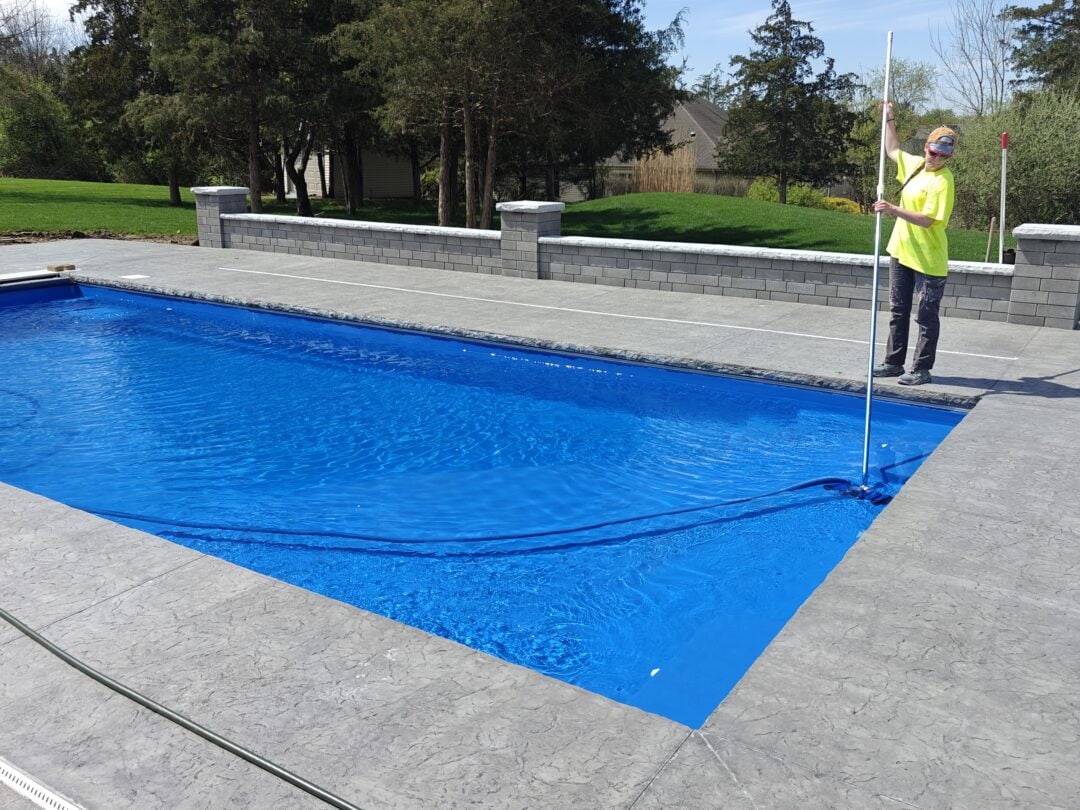
Once the pool is clear and algae-free, we recommend vacuuming the pool floor to remove any outstanding debris or algae particles still stuck to the bottom.
Step 8: Balance the Water Chemistry
Now that your pool is clear and algae-free, you can focus on rebalancing the water chemistry. See the above-listed chemical breakdown for a refresher.
Should You Hire a Professional Pool Service?
If this sounds overwhelming and scary to you, you’re not alone. Many pool owners opt to have a professional pool service company come out and open and balance their pool for them. This ensures proper opening techniques and water balancing that will get your pool ready for the swim season.
A weekly service visit typically covers:
- Skimming debris and vacuuming
- Water testing and balancing
- Filter and pump inspection
- Equipment performance checks
- Early detection of leaks or problems
For more information on professional pool service vs. diy pool maintenance, check out this article.
Preventing a Green Pool Next Season
The best way to avoid opening a green pool come spring is by properly closing the pool in the fall, as well as consistent pool maintenance throughout the year.
Here are a few seasonal maintenance tips:
- Test water weekly and maintain balanced pool water chemistry
- Skim and vacuum once a week
- Brush walls and steps once a week
- Monitor equipment performance (ensure pump has full prime, filter pressure is not too high or low, heater is firing properly, etc.)
- Backwash or clean filters once a month or every other month, depending on swimmer load, debris buildup, etc.
Midwest weather, like we experience here in Northwest Indiana, can be unpredictable. Proactive care is an absolute necessity to protecting your investment.
Final Thoughts
Opening a green swimming pool is not uncommon, and now you know that it’s possible to fix! The key to avoiding green pools is having a solid, consistent maintenance plan in place. The longer you have your pool, the better you get to know it, including the quality of openings.
By practicing consistent, quality pool maintenance and properly closing your pool (whether you choose to do it yourself or hire a professional company), you can avoid opening to a green swamp in the future.
Whether you own a fiberglass pool, a vinyl liner pool, or a concrete pool, pool maintenance is the most important aspect of pool ownership. Mastering pool maintenance will help avoid algae buildup, not just during the off-season, but during the swim season as well.
For more information on inground pool maintenance and water chemistry, check out the articles below. Feel free to dive into our learning center for educational content on all things pools, landscaping, and concrete. Thanks for reading. Have a great day!
Northwest Indiana Inground Pool Water Chemistry Checklist
Tell-Tale Signs That Your Pool Water Is Unbalanced
How Often Do I Need to Get My Pool Water Tested?
Written by Logan Edgemon
We run pool openings and closings across Northwest Indiana. Packages and timing are on that page.