
Northwest Indiana Inground Pool Water Chemistry Checklist
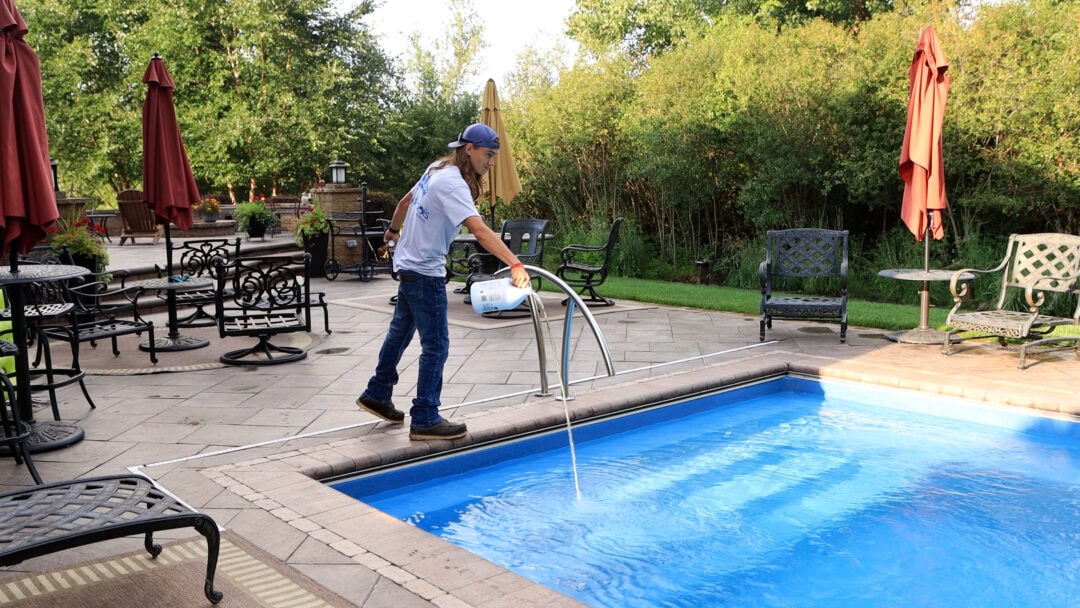
So you just had an inground pool installed. I bet you’re absolutely jazzed to jump in that water. We don’t blame you. But wait! Have you balanced your water chemistry yet?
Owning a pool is all about maximizing your outdoor enjoyment and relaxation. Maintaining an inground pool is not actually that hard. It all revolves around one key element that keeps your water clean, clear, and safe to swim in: water chemistry.
In addition to designing and building inground pools throughout Northwest Indiana and South Chicagoland, Royal Pools G2 Landscaping helps homeowners master water chemistry, thus protecting their investment.
Whether you have a concrete pool, a vinyl liner pool, or a concrete pool, properly balanced water chemistry helps prevent expensive repairs, improves swimming comfort, and keeps your pool water clean, clear, and swimmable all year-long.
Utilize this weekly water chemistry maintenance checklist to keep your pool on track. Let’s dive in.
Why Pool Water Chemistry Matters
Your pool water is constantly changing due to weather, rainfall, sun exposure, swimmer usage, and debris. Without proper water chemistry, your pool can quickly become cloudy, green, irritating to swimmers, or even damaging to pool equipment and surfaces.
Pool water is subjected to a lot during the swim season. Changing weather, including rainfall and heat, UV exposure, debris and organics entering the water, swimmer usage putting oils and bodily fluids into the water, and more, all affect pool water chemistry, requiring you to test and possibly adjust your chemistry.
Maintaining balanced water chemistry helps:
- Prevent algae growth
- Protect pool liners and finishes
- Extend equipment lifespan
- Improve sanitizer effectiveness
- Create safer swimming conditions
- Reduce long-term maintenance costs
As we said, balanced water chemistry is essential regardless of the type of pool you have. Pool water is still pool water, no matter the shell around it.
The Essential Pool Water Chemistry Checklist

1. Test Your Water Weekly
Maintaining balanced water chemistry is the most important aspect of pool ownership
- pH: 7.2 – 7.6. Balanced pH protects the pool gel coat as well as your equipment, keeps swimmers comfortable, and allows chlorine to do its job. Maintain pH between 7.2 and 7.4 in fiberglass pools.
- Low pH means the water is acidic, high pH means the water is basic. Both instances can lead to itchy skin, eye irritation, and brittle hair. Acidic water can damage pool equipment beyond the gel coat, so it is vital to keep pH within range.
- Alkalinity: 80 to 120 ppm (parts per million) ensures pH stays in range.
- Alkalinity acts as a buffer for pH, helping to stabilize it.
- Calcium Hardness: 175 to 350 PPM for concrete and vinyl liner pools. Maintain calcium levels under 120 ppm for fiberglass pools.
- Too much calcium can cause the gel coat to fade over time. However, there are scale sequestrants that help prevent scaling in water with high calcium levels.
- Sanitizer (Chlorine, Bromine, Salt-Chlorine): Maintain appropriate sanitizer levels to keep water clear and safe.
- Pro tip: Saltwater pools aren’t chlorine-free. What makes a saltwater pool a saltwater pool is the salt-chlorine generator. These generators are plumbed into the pool equipment. They transform salt into chlorine as water passes through the cell using a process called electrolysis. The newly chlorinated water is then sent back into the pool.
- Chlorine: 1 – 3 ppm
- Bromine: 2 – 4 ppm
- Cyanuric Acid aka CYA (Stabilizer): 30 – 50 ppm.
- Especially important in outdoor pools to protect chlorine from UV degradation. Essentially, CYA protects chlorine from being eaten by the sun. However, an excess of stabilizer can cause chlorine to lose its sanitizing powers. Most chlorine tablets are comprised of trichloro-s-triazinetrione, which is highly stabilized chlorine.
2. Add Necessary Chemicals
It is important that you balance your water chemistry before adding chlorine. Pool balancers include:
- pH increaser
- Muriatic acid or pH decreaser
- Alkalinity increaser
- Calcium increaser
- Stabilizer (chlorine tablets have a built-in stabilizer)
If you are unsure of which, or how many, chemicals to add, we recommend having a professional electronic test done by a local pool store. RPG2 retail store provides free electronic water testing for Northwest Indiana and South Chicagoland pool owners.
3. Clean and Maintain Your Pool Equipment
Water chemistry keeps the pool water clean and clear. Your skimmers keep the debris out, sending it through your filter. Over time, your filter can become dirty and clogged, preventing the balanced water chemistry from keeping the pool clean and clear.
Monitoring your pool equipment (pump, filter, heater, chlorinator, UV/ozone system, etc.) is just as important as maintaining balanced water. Without proper flow and circulation in your water, you might as well dump your chemicals down the toilet.
Once a week, be sure to:
- Clear skimmer baskets of debris, leaves, hair, etc.
- Clear pump baskets of debris, leaves, hair, etc.
- Check filter pressure (between 10 and 25 PSI) and backwash sand or D.E. filters, or clean cartridges if pressure is 10 PSI or more too high (be sure to recharge D.E. filter with new D.E. powder after backwashing)
Proper circulation and filtration help maintain pool water balance and reduce sanitizer demand.
Pool Water Chemistry Tips by Pool Type
Fiberglass Pools
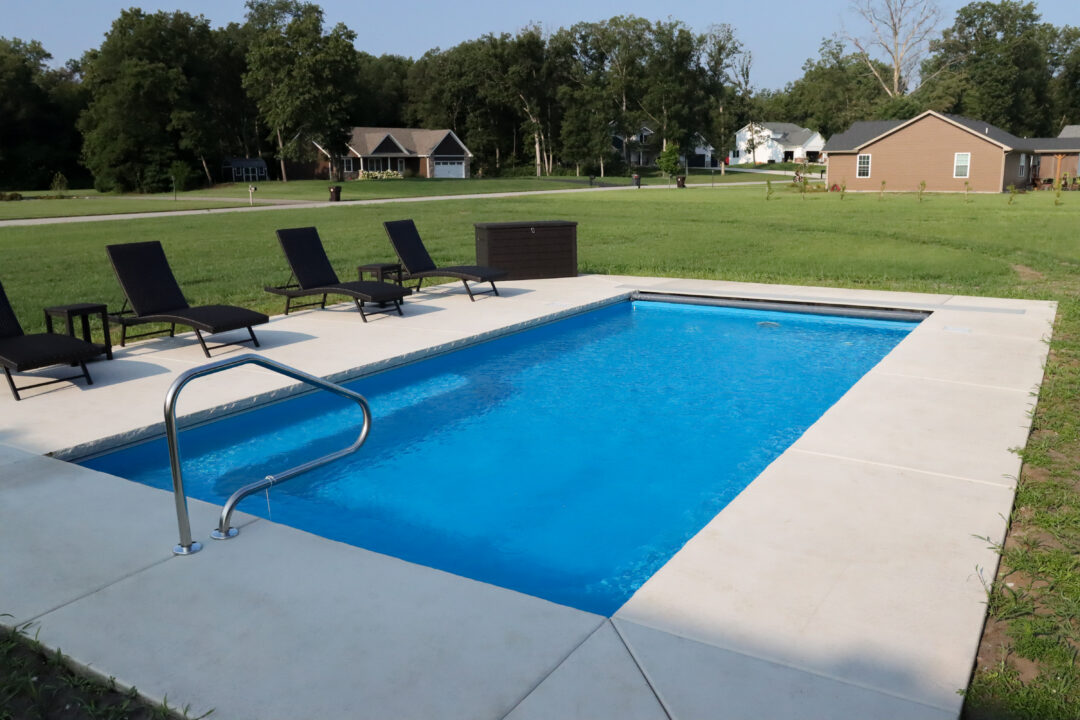
Fiberglass pools are the most maintenance-friendly inground pool option you have. But water chemistry in fiberglass pools is even more specific than the other pool types.
Fiberglass pool owners, be sure to:
- Test the water using an at-home pool test (test strips or DPD test kits are recommended) at least once a week to ensure that pH, alkalinity, calcium, CYA, and sanitizer levels are within the proper range for safe swimming.
- Maintain calcium hardness levels under 120 PPM or use a scale sequestrant. Maintain pH between 7.2 and 7.4.
- Inspect skimmer and pump baskets. Remove debris that gets stuck.
- Brush waterline, walls, steps, and floor gently with a pool brush.
- Monitor water level (at mid-skimmer or just above mid-skimmer is recommended).
- Check filter pressure to determine whether the filter needs cleaning.
Vinyl Liner Pools
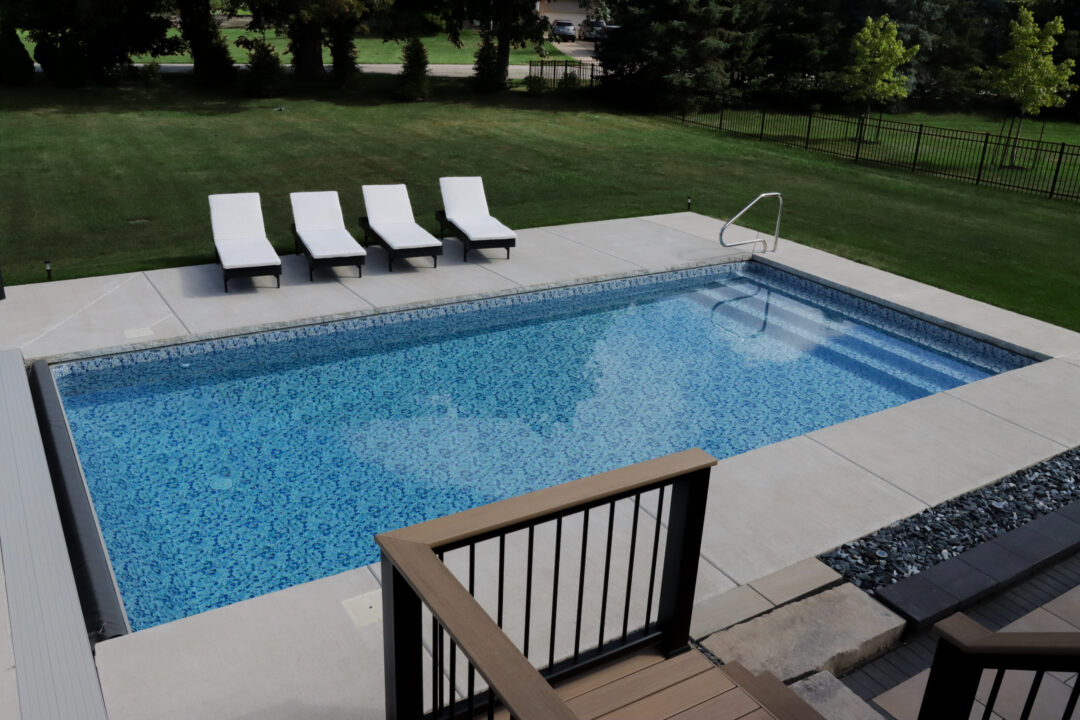
Water chemistry is especially important in vinyl liner pools, as unbalanced water chemistry can lead to premature liner wrinkling, color fading, and more.
Take time to:
- Test your pool’s water chemistry using an at-home pool test (test strips or DPD test kits are recommended) weekly to ensure balanced pH, alkalinity, calcium, CYA, and sanitizer levels.
- Monitor skimmer and pump baskets. Remove excess debris.
- Brush waterline, walls, steps, and floor gently with a vinyl liner pool brush. Pay extra close attention to the liner seams.
- Keep an eye on the water level (at mid-skimmer or just above mid-skimmer is recommended).
- Check filter pressure to ensure the filter is filtering properly and does not need to be cleaned.
- Ensure that the top of the liner is flush and secure with the top of the pool deck
Concrete Pools
Concrete pools require the most maintenance and attention when it comes to pool water chemistry because porous surfaces can affect water balance and encourage algae growth.
Concrete pool owners should:
- Test your pool’s water chemistry using an at-home pool test (test strips or DPD test kits are recommended) weekly to ensure balanced pH, alkalinity, calcium, CYA, and sanitizer levels.
- Monitor skimmer and pump baskets. Remove excess debris.
- Brush surfaces regularly
- Keep an eye on the water level (at mid-skimmer or just above mid-skimmer is recommended).
- Check filter pressure to ensure the filter is filtering properly and does not need to be cleaned.
Seasonal Pool Chemistry in Northwest Indiana
Seasonal weather changes affect water chemistry, especially here in the Midwest. Here’s a quick rundown of what to do during each season.
Spring Opening
- Test and balance all chemicals
- Shock pool thoroughly if the water is cloudy, green, or black
- Ensure equipment is running properly
- Clean filter if necessary
Peak Summer
- Test water weekly
- Monitor chlorine during heat waves
- Monitor filter pressure and flow weekly
- Vacuum, skim, backwash, and test the water after swimming
Fall Closing
- Balance water before winterizing
- Add winter chemicals
- Install winter pool cover
Many homeowners eventually realize that professional service saves both time and money. If you’ve searched for pool maintenance near me, you already know how valuable expert help can be. You can get a free pool maintenance quote here.
Conclusion
We understand that maintaining balanced water chemistry can be overwhelming. Implementing a weekly maintenance checklist is the best way to master your pool water chemistry.
Consider having your water electronically tested by a local pool store a few times. This will give you an idea of what chemicals your pool needs weekly. Remember: regular water testing is essential.
Water balance is key to owning a pool across the board… concrete, vinyl liner, fiberglass, and above ground pools alike. If you need help with your pool maintenance, we are here to help. Check out the articles below for more pool maintenance and water chemistry information. For more educational articles and videos on all things pools, landscaping, and concrete, check out our learning hub at the top of our page. Thanks for reading. Have a great day!
Tell-Tale Signs That Your Pool Water Is Unbalanced
How Weather in Northwest Indiana Affects Pool Maintenance
7 Common Inground Pool Maintenance Mistakes to Avoid
Written by Logan Edgemon
Prefer not to manage the chemistry yourself? Here is what our weekly pool maintenance covers.