
Chlorine vs. Algaecide: Which Is Best for Clearing a Green Pool?
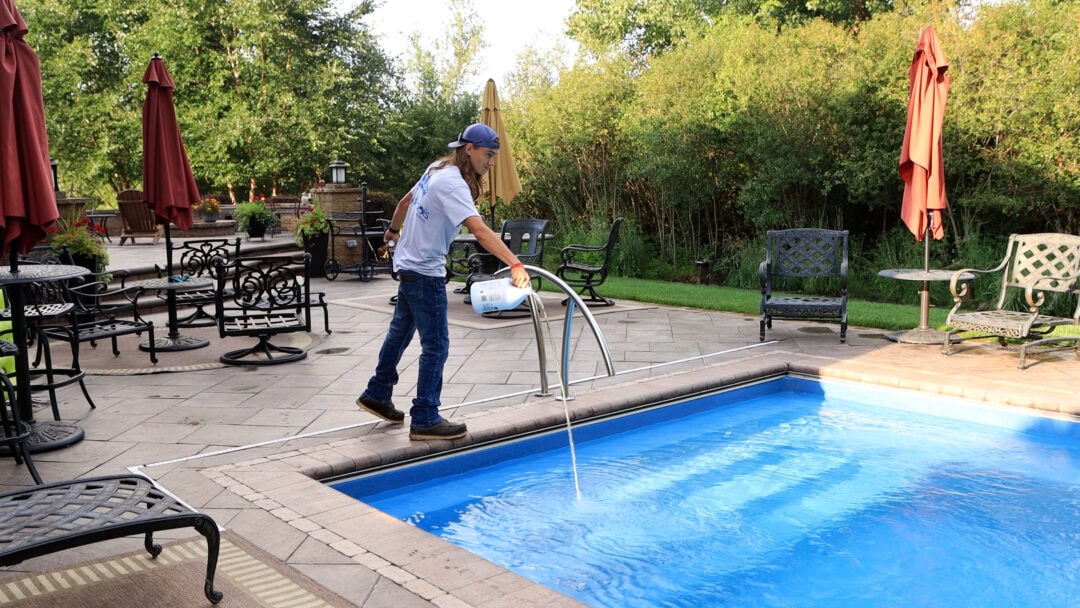
Pool owner and former pool maintenance technician here. Let me tell you, there is nothing more annoying than opening a pool to green water. Talk about a day-ruiner. Whether you own an inground pool or above ground pool, green water is almost always an indicator that algae has taken over your pool water.
When pools turn green, pool owners typically ask the same question: Should I use chlorine or algaecide? This makes sense. Both products play a role in pool maintenance and water chemistry, but they do different things. Understanding the roles that chlorine and algaecide play will help you become an expert in restoring clean and clear water and preventing algae growth in the future.
In addition to building inground pools across Northwest Indiana and South Chicagoland for over 25 years, one thing we do here at Royal Pools G2 Landscaping is maintain inground pools. That means clearing a lot of green pools, especially at the start of the season. In this article, we’ll teach you how to clear a green pool and how to use each product to achieve the goal and prevent algae from returning. Let’s dive in.
Why Do Pools Turn Green?
As previously stated, green water is a result of algae growth. Algae can grow for several reasons, but more often than not, it’s a result of low sanitizer levels. Other common causes for algae growth include:
- Hot weather
- Heavy rainfall
- Poor water circulation
- Low pool chlorine levels
- Improper water chemistry
- Neglected maintenance
After algae first blooms, it can spread like wildfire. Your entire pool can turn bright green in just a day or two. So, how do you clear the green and return your pool to the beautiful, crystal-clear state we all love so much? Let’s talk about the king of pool sanitizers: chlorine.
Chlorine: The Primary Weapon Against Algae
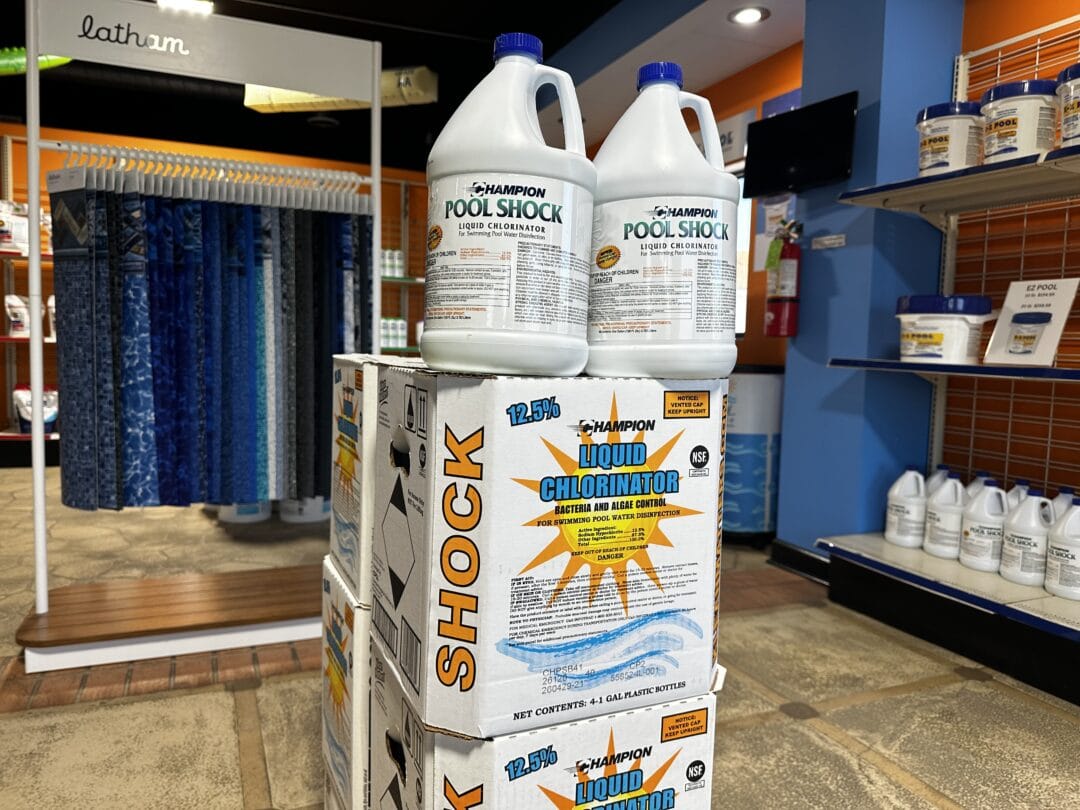
So, your pool water turned green, and you need to clear it. Whenever algae blooms and/or pool water goes green, your first line of defense should always be chlorine, specifically liquid or granular shock.
Chlorine is the best sanitizer available for pools on the market. It kills bacteria, viruses, and, of course, algae. Typically, algae growth is an indicator of low chlorine levels. The only way to kill the algae and clear the pool is by adding chlorine to the water.
Contrary to popular belief, algaecide doesn’t always actually kill algae. Rather, algaecide helps prevents algae from growing for a certain period of time. To kill algae, you need shock, ideally, liquid chlorine.
When it comes to chlorine, there are three primary methods of introducing chlorine into the water:
- Liquid pool chlorine (sodium hypochlorite) provides a rapid increase in chlorine levels and is the most effective treatment for green or cloudy pools.
- Granular pool shock (calcium hypochlorite) also raises chlorine levels while attacking algae, killing bacteria and contaminants, and more.
- Chlorine tablets are primarily used for slow, steady chlorination. Tablets work best when paired with shock for traditional maintenance. Tablets themselves are not enough to clear a green pool, however.
For visible algae growth, we recommend shocking the pool with a heavy dose of liquid chlorine all at once while brushing the walls and floor and running the pump and filter continuously.
What About Saltwater Pools?
Let’s dispel another popular pool-related myth: saltwater pools are chlorine-free. That is NOT the case.
Saltwater pools still rely on chlorine to clean the pool and kill bacteria and algae. The difference is that salt chlorine generators produce chlorine constantly via electrolysis when salt passes through the cell, transforming into chlorine.
If algae blooms in a saltwater pool, the salt chlorine generator typically won’t be able to produce enough chlorine to kill the algae and clear the pool even after you boost its percentage. You will most likely need to supplement the salt cell with liquid chlorine when dealing with algae or green water.
What Does Algaecide Do?
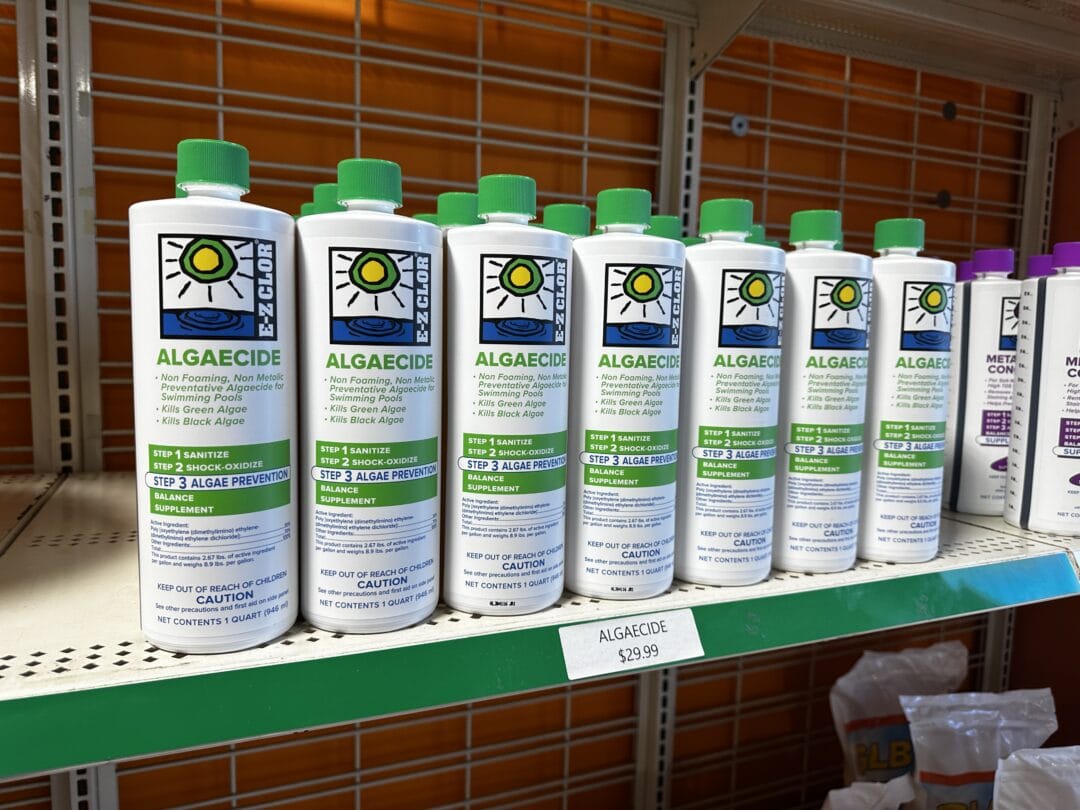
Algaecide is a preventative chemical used in pools to help control and prevent algae growth. As previously stated, many pool owners assume that adding algaecide will clear a green pool.
You may be able to find specialty algaecides that can help weaken existing algae, but algaecide alone will never clear a green pool or kill algae. You will need chlorine for that.
Think of their relationship like this:
- Chlorine kills the algae.
- Algaecide helps keep it from coming back.
Using algaecide without shocking the pool will NOT clear a green pool or kill algae. You’d basically be dumping algaecide down the toilet. You should use algaecide AFTER the chlorine treatment clears the pool to prevent algae from returning.
The Best Process for Clearing a Green Pool
If you have recently opened your pool for the summer and were greeted with a green swamp, you’re probably wondering how to clear it. For a detailed breakdown on how to clear a green pool after opening, check out this article.
To clear a green pool, we recommend:
- Remove debris
- Brush floor/walls & inspect equipment
- Balance pH & alkalinity if possible
- Shock the pool
- Test the water chemistry
- Clean or backwash the filter
- Vacuum & run pool system continuously
- Balance the water chemistry
- Once clear and balanced, add algaecide to prevent algae from returning.
Prevention Is Easier Than Treatment
The easiest algae bloom to deal with is the one that never happens. That is to say, preventing algae from blooming is much more manageable than killing visible algae.
Maintaining balanced water chemistry, running your pool for at least 8 – 10 hours daily, regularly cleaning your filter, and weekly brushing of the floor and walls can significantly lower the risk of algae bloom.
Using algaecide as a weekly maintenance preventative is a great idea. Use a heavier dose during periods of high heat, heavy rain, or whenever the pool won’t be used for an extended period of time.
Which Is Better: Chlorine or Algaecide?
The answer to this question depends on your situation.
If your pool is already green and harboring algae, chlorine is the clear choice to kill it and restore clear, swimmable water.
If you’re trying to avoid algae growth, particularly if you JUST cleared algae and/or opened up to green water, use algaecide to prevent further algae growth. Use chlorine and algaecide together for the best sanitization and preventative combination. Chlorine does the heavy work by eliminating algae, while the algaecide provides a layer of protection to help keep algae from growing again.
The key is: maintain balanced water chemistry. Maintain balanced water chemistry and consistent, proper chlorine levels, and your pool should not grow algae. If it does for some reason, now you know what to do. Thanks for reading. Have a great day!
Salt Chlorine Generators vs. Traditional Chlorine: Which Is Better in Northwest Indiana?
Northwest Indiana Inground Pool Water Chemistry Checklist
7 Common Inground Pool Maintenance Mistakes to Avoid
Written by Logan Edgemon
If keeping the water right is more work than you want, our weekly pool maintenance takes it off your hands.