
Vinyl Liner Pools vs. Fiberglass Pools: Best in Northwest Indiana?
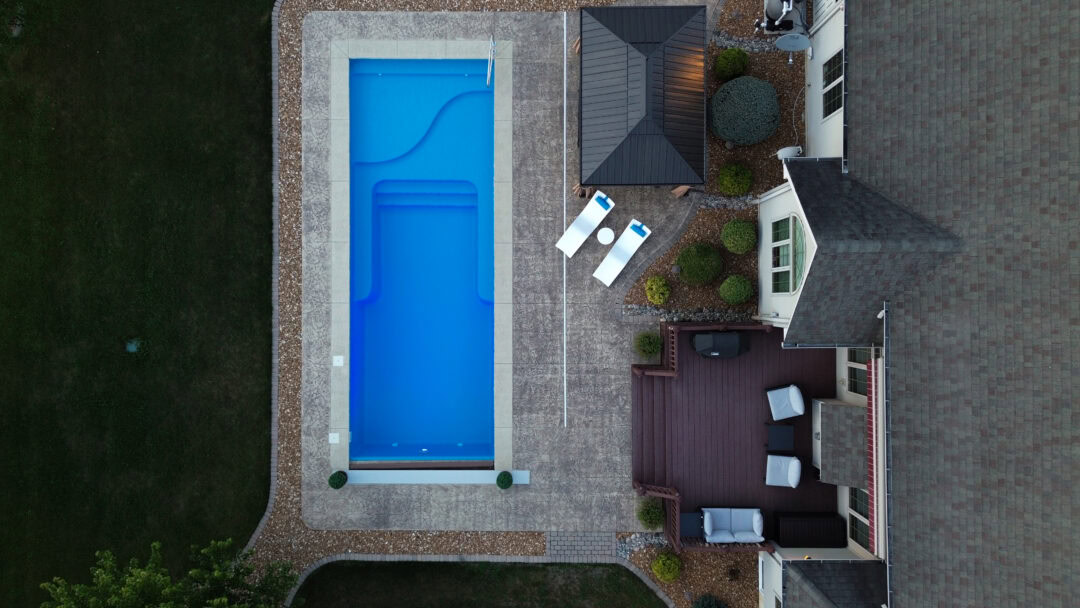
When it comes to inground pool shopping, you have three primary options: concrete pools, fiberglass pools, and vinyl liner pools. All three serve the same purpose: to provide a beautiful and lasting area for swimming and family fun.
The difference between pool types is how they’re made, installed, and maintained. Royal Pools G2 Landscaping has built fiberglass and vinyl liner pools for homeowners across Northwest Indiana and South Chicagoland for over two and a half decades. Over that time, the technology used to build these pools has undergone significant improvements, making them highly coveted among homeowners looking for a new pool.
The question most homeowners have is: which pool will fit best with my yard, budget, and swimming goals? Great question! In this article, we’ll break down the differences between vinyl liner pools and fiberglass pools, including cost, maintenance, installation, and long-term considerations. By the end of this article, you should have a good idea of which inground pool type is right for you. Let’s dive in.
Understanding Fiberglass Pools

When compared to how concrete and vinyl liner pools are manufactured and built, fiberglass pools are incredibly unique. Rather than being built primarily in your backyard, fiberglass pools are constructed in controlled fiberglass warehouses, inspected, and then delivered to your backyard via freight.
For this reason, installing a fiberglass pool typically takes less time than building a concrete or vinyl liner pool start to finish.
Advantages of Fiberglass Pools
Smooth, non-porous surface
Fiberglass pool surfaces are non-porous, meaning no tiny, little holes in the surface that can harbor algae growth, and no chemicals absorbed into the fiberglass.
Additionally, these surfaces are extremely smooth on the feet and slip-resistant, providing enhanced swimmer comfort and safety.
Lower maintenance
With the non-porous nature of fiberglass pools in mind, it’s important to note that fiberglass pools are the most maintenance-friendly inground pool option available. Fiberglass pools require roughly 30% less chlorine than other inground pool types.
See the checklist below for a weekly fiberglass pool maintenance routine.
- Test the water using an at-home pool test (test strips or DPD test kits are recommended) at least once a week to ensure that pH, alkalinity, calcium, CYA, and sanitizer levels are within the proper range for safe swimming.
- Inspect skimmer and pump baskets. Remove debris that gets stuck.
- Brush waterline, walls, steps, and floor gently with a pool brush.
- Monitor water level (at mid-skimmer or just above mid-skimmer is recommended).
- Check filter pressure to determine whether the filter needs cleaning.
For a more detailed breakdown on how to master fiberglass pool maintenance, check out this article.
Quick Installation
As previously established, fiberglass pools are delivered to their installation site as a full fiberglass pool shell, expediting the installation process. Most fiberglass pool installations take anywhere from four to six weeks, sometimes even less, depending on the pool size.
Vinyl liner pools take roughly the same time to install, but a large excavation and additional features can increase the installation time.
Durability
Fiberglass pools are simply the most durable inground pool available. Nine layers of vinyl-ester reinforced fiberglass make absolutely sure of this.
As long as you maintain the fiberglass pool chemistry and NEVER drain the pool, it will never crack the way a concrete pool does. Additionally, balanced water chemistry means the surface does not degrade and wrinkle over time like liner pools, which require draining and liner replacements every 7 – 10 years. Once water enters your fiberglass pool, that’s your water for as long as the pool is in the ground.
Low Lifetime Cost
While they do cost more than vinyl liner pools up front, you will save significantly over time by avoiding the additional chemical spending and liner replacements inherent with vinyl liner pools.
Disadvantages of Fiberglass Pools
Lack of Customization
Let’s talk about the biggest flaw most people find with fiberglass pools. When it comes to this inground pool type, what you see is what you get.
When looking through a manufacturer’s fiberglass pool options, the sizes and shapes they offer are the only designs available. You cannot customize the size and shape of a fiberglass pool like you can a concrete or vinyl liner pool. Most homeowners interested in fiberglass pools will still find a design they love, however.
Transportation Restrictions
As previously stated, fiberglass pools are constructed off-site and then transported to the installation site via freight.
Because it is transported on a truck, sometimes hundreds of miles, the largest fiberglass pool shell can be around 20 x 43, and even then, 43-foot-long fiberglass pools are rare.
Most cap out around 40-41 feet long. If you’re looking for a super long lap pool, fiberglass won’t be the pool for you.
Fiberglass Pool Cost
Here in the Region, fiberglass pools do cost a pretty penny. The cost of a fiberglass pool in Northwest Indiana typically falls between $75,000 and $130,000+ for a complete backyard project, depending on:
- Design and size of the pool
- Site conditions & excavation
- Decking, coping, and surrounding hardscape
- Permits, codes, and utilities
- Transportation costs
- Additional features
Osmotic Blistering
You’re probably wondering, “What the heck is osmotic blistering?” Let us explain. The gel coat of a fiberglass pool is semipermeable, meaning that super small amounts of water can filter in and out of the top gelcoat surface. Normally, this is no problem.
When it comes to fiberglass pools, manufacturers reinforce the layers of fiberglass with a resin so that the fibers hold together, making the pool durable. The most commonly used resins are poly-ester resin and vinyl ester resin. RPG2 recommends fiberglass pools reinforced with vinyl ester resin.
Polyester resin allows water to combine with resin elements and become trapped under the gel coat, creating bubbles, also known as osmotic blisters.
This is rare, however, as most manufacturers now use 100% vinyl ester resin during fiberglass construction to prevent osmotic blistering.
Understanding Vinyl Liner Pools
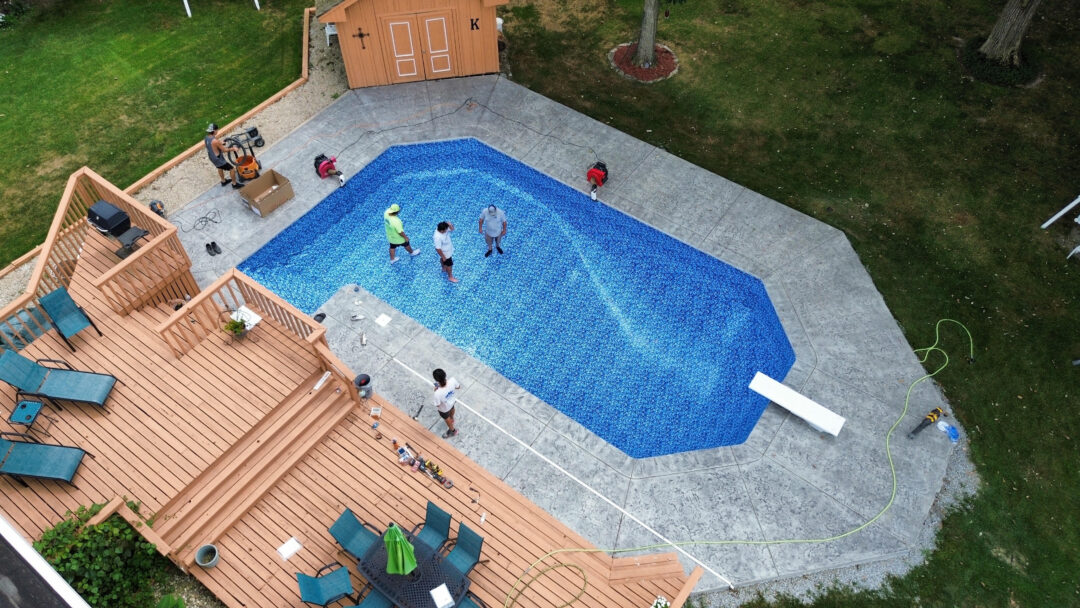
Vinyl liner pools utilize a steel, polymer, or composite wall structure combined with a custom-fit vinyl liner. During vinyl liner swimming pool construction, the pool is excavated, walls are installed, plumbing is completed, and a custom liner is fitted to create the waterproof interior.
This construction method offers tremendous flexibility in shape and design.
Advantages of Vinyl Liner Pools
Lower Upfront Investment
For many families, the most attractive feature is the lower vinyl liner pool cost compared to fiberglass.
A typical vinyl liner pool cost in Northwest Indiana often ranges from $60,000 to $100,000+, depending on:
- Design and size of the pool
- Site conditions & excavation
- Decking, coping, and surrounding hardscape
- Permits, codes, and utilities
- Transportation costs
- Additional features
This lower entry point allows some homeowners to allocate more budget toward outdoor kitchens, fire pits, landscaping, or larger patios.
Aesthetic Versatility
The downside of replacing your liner is spending a bunch of money. Duh, right? But there is an upside that many pool owners find with liner replacements. By replacing your pool liner, you’re essentially changing the entire look of your pool, and potentially the whole backyard.
Sure, you can pick the same liner as the one you had before, but a new liner pattern can breathe new life into your backyard design and add another level of beauty.
This aesthetic versatility–the ability to completely change the look of your pool by replacing the liner– adds another layer of customizability to liner pools, making them irresistible to many.
Even if you don’t like the look of your liner after a couple of years, you can always replace it earlier, as long as you have the means to do so.
Customization
Because they are built almost entirely in your backyard, vinyl liner pools are highly customizable. A vinyl liner pool can be just about any shape or design you choose. Looking for a pool shaped like Darth Vader’s helmet? Maybe a pool shaped like a football? Vinyl liners are the way to go.
Smooth non-porous surface
Similar to fiberglass pools, vinyl liners are non-porous and extremely smooth. Algae can, however, occasionally grow through the liner seams if the pool is left unbalanced. Be sure to pay attention to brushing the seams during weekly cleanings.
Disadvantages of Vinyl Liner Pools
Vinyl Pool Liner Replacements
As previously stated, a pool vinyl liner must be replaced every 7 – 10 years, significantly adding to the lifetime cost of owning a vinyl liner pool.
For years, many pool owners would extend their liner’s lifespan to 15, sometimes even 20 years, much to the detriment of the liner. The more complicated the liner removal and floor/wall repairs are, the more expensive the liner replacement will be overall.
Maintenance
Vinyl liner pools are non-porous, yes, but that means nothing if you do not maintain balanced water chemistry (see below). Unbalanced water can lead to liner discoloration and liner wrinkles. This means areas for algae to bloom, leading to additional brushing, vacuuming, and chemical spending.
Balanced water chemistry is key to pool ownership, regardless of the type. Check out this article for a breakdown of vinyl liner pool maintenance.
Durability
Vinyl liners are not weak per se, but liners themselves are not nearly as strong as concrete or fiberglass pool surfaces.
We recommend keeping animals and sharp objects, all of which can easily tear or puncture a liner, out of vinyl liner pools at all times.
Customization costs
As I’m sure you can understand, with customization comes additional cost. The larger your pool is, the more the project will cost. Outfitting your pool with an automatic swimming pool cover or a retaining wall all adds to the overall cost of installing a liner pool.
The pool contractor you end up working with should give you a solid price range based on your wishes and desires. Remember that most add-ons will increase the overall price.
Comparing Water Chemistry
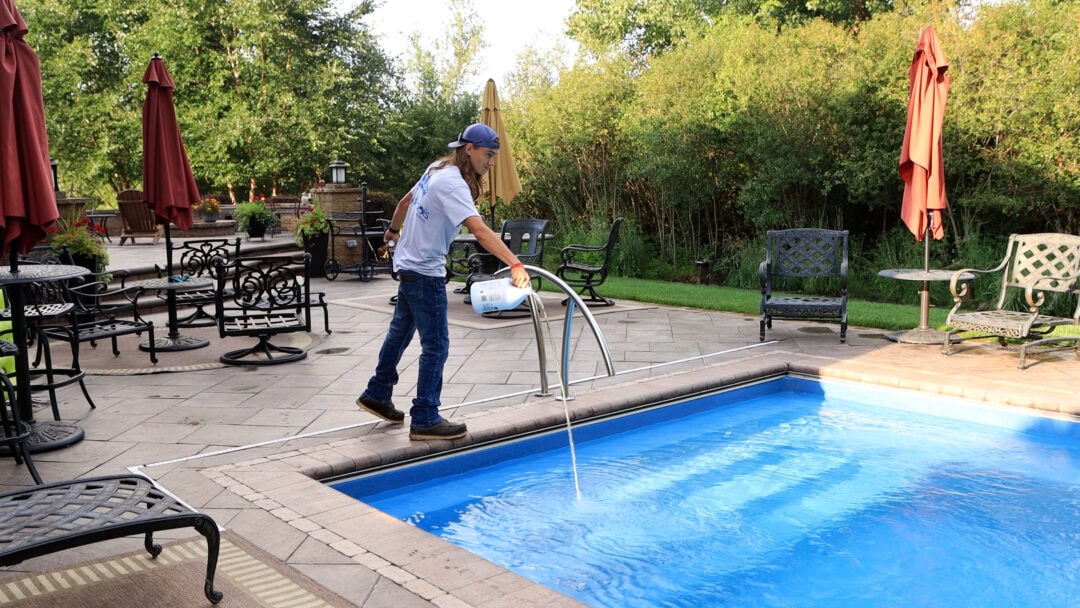
The most important aspect of pool maintenance for any pool type is maintaining consistent, balanced water chemistry. Balanced pool chemistry looks like:
- Chlorine/Bromine: 1 – 3 PPM (Free and total chlorine should be equal. TC > FC = dead chlorine)
- pH: 7.2 – 7.8 (7.2 – 7.4 in fiberglass pools)
- Alkalinity: 80 – 120 PPM
- Calcium Hardness: 175 – 350 PPM (under 120 PPM in fiberglass pools)
- Cyanuric Acid: 0 – 50 PPM
- Salt levels: 2700 – 3400 PPM (exact range may vary depending on the brand of salt chlorine generator)
Fiberglass Pools and Water Chemistry
One great thing about fiberglass is that its non-porous surface does not readily absorb chemicals or promote algae growth. The flipside of that coin is that fiberglass pools require slightly more specialized and specific water chemistry, particularly regarding pH and calcium hardness levels.
When balancing fiberglass pools, you must maintain the water’s pH on the low end of the range, between 7.2 and 7.4.
pH is a range that measures how acidic or alkaline (basic) water is. A pH level under 7.2 indicates acidic water, whereas a pH level above 7.8 indicates alkaline (basic) water. In fiberglass pools, pH is key to protecting your fiberglass pool’s finish/surface.
Calcium hardness levels should be maintained under 120 PPM. Over time, high calcium levels in fiberglass pools will cause the gel coat surface to form scale. Unfortunately, the only way to remove calcium from pool water is by draining some of the water and diluting it with fresh water until the calcium level is under 120.
Avoid calcium-based products, such as calcium-hypochlorite, to avoid calcium buildup. If calcium levels are above 120 PPM, use a scale sequestrant to offset any calcium-related scaling or discoloration. Royal Pools G2 Landscaping recommends Revive Weekly from API.
Vinyl Liner Pools and Water Chemistry
Vinyl liner pools must be maintained with the standard pool water balance listed above. Vinyl liner pools are relatively simple to maintain as long as you keep the water balanced.
While vinyl liners are non-porous, unbalanced water chemistry can cause algae to bloom in the seams of the liner, where the material is stitched together. Additionally, unbalanced water chemistry can cause the steel walls behind the liner to rust, the liner to wrinkle, etc.
Like all pools, be sure to test your vinyl liner pool water weekly and make the necessary chemical adjustments.
Final Thoughts
The right pool for you will ultimately come down to your budget and pool/swim goals. Are you looking for a customizable, aesthetically versatile option that doesn’t cost as much up front? Choose vinyl liner pools. Do you need a durable, maintenance-friendly option? Choose a fiberglass pool!
Both pool types will create fun memories that last a lifetime. You really can’t go wrong with either option. If you’re stuck between the two, ask yourself how much maintenance you’re willing to do, as well as how much money you’re willing to spend on the pool over time.
We can’t decide for you folks, but we can educate you on your options. We hope this article gave you a better understanding of both vinyl liner and fiberglass pools. Check out the articles below for more information on the different pool types. Dive into our learning hub at the top of our page for more educational content on all things pools, landscaping, and concrete. Thanks for reading. Have a great day!
Pros and Cons of Freeform Vinyl Liner Pools
Three Unknown Facts About Fiberglass Inground Pool Construction
Guide to Freeform Fiberglass Pools: Pros, Cons, Top FAQs
Written by Logan Edgemon
When your liner is ready to be replaced, here is what our vinyl liner replacement service covers in Northwest Indiana and what it costs.