
Salt Chlorine Generators vs. Traditional Chlorine: Which Is Better in Northwest Indiana?
If you own a swimming pool, you know what it takes to keep a pool crystal clear, clean, and swimmable. That’s right: balanced water chemistry. It starts with your sanitizer. When it comes to pools, there’s one clear industry favorite, used by a majority of the pools across the country: chlorine.
If you’ve ever swum in a pool, odds are it was chlorinated. Chlorine is simply the best pool water sanitizer available on the market, but not every pool owner is a fan of how chlorine feels on their skin. Many pool prospects and pool owners are drawn to salt pool generators (salt cells) and saltwater pools, under the assumption that they’re a chlorine-free option.
This is a common misconception. The truth is: saltwater pools are chlorinated. More on this later, but we wanted to clear this up right away. If you’re looking into salt cells for a complete chlorine alternative, it’s not the product for you.
Royal Pools G2 Landscaping installs inground pools and designs backyards for homeowners across Northwest Indiana and South Chicagoland. Over the years, one of the most common questions we receive from new pool prospects is, “Is salt better than chlorine for keeping my pool clean and clear?” It’s a great question. Now that you know that saltwater pools do use chlorine, let’s dive into the difference between using a salt chlorine generator and traditional chlorination methods.
Understanding Traditional Chlorine Pools
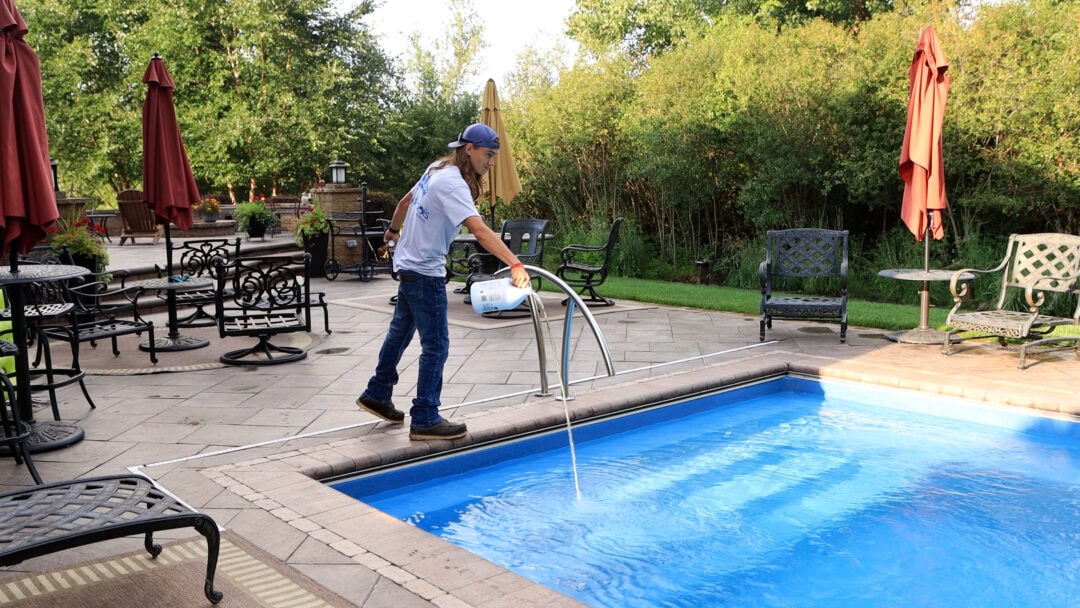
The process for maintaining a traditionally chlorinated pool involves actually handling chlorine itself, another thing some people are uncomfortable with. Traditional chlorine typically comes in the following forms:
- Chlorine tablets
- Liquid chlorine (AKA liquid shock)
- Granular chlorine (AKA powder shock)
The purpose of chlorine is to kill bacteria, algae, and other contaminants that could turn the water green, cloudy, etc. Pool owners are encouraged to use chlorine tablets as a steady source of chlorination daily in combination with shock whenever the pool needs a quick chlorine boost.
Shock is added directly to the pool by the homeowner, whereas tablets are placed into a chlorinator or floating chemical feeder. Tablets are convenient as they slowly dissolve inside the chlorinator or feeder, consistently providing your pool with a steady stream of chlorine.
A traditionally chlorinated pool does require chemical and chlorine adjustments weekly, whereas salt pools chlorinate themselves. This is one major drawback to traditional chlorine.
Additionally, chlorine tablets are known for introducing cyanuric acid stabilizer (CYA) to your pool water. CYA essentially acts as sunscreen for your chlorine, protecting it from UV degradation. Over time, CYA buildup can prevent chlorine from sanitizing the pool. This is another big flaw, as the only way to lower CYA levels in a pool is by draining the water and adding fresh water.
What Is a Salt Chlorine Generator?
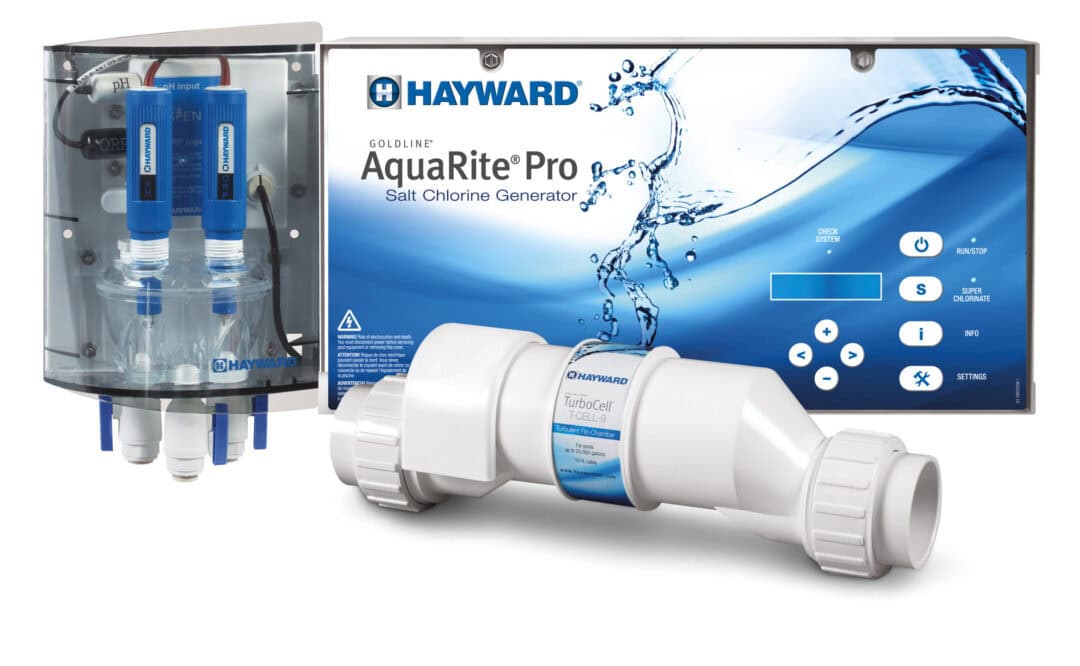
A salt chlorine generator is a machine that transforms pool salt into liquid chlorine via a process called electrolysis. Instead of adding traditional chlorine tablets or shock, you add pool salt into your pool, which then passes through the cell and produces the exact amount of chlorine needed to sanitize your pool.
Like traditionally chlorinated pools, chlorine levels in a saltwater pool should be kept at 1-3 ppm. A salt cell running on 100% will produce about a pound of chlorine in a pool in 24 hours. Not all pools in Northwest Indiana are run 24 hours a day, most are run 8-12 hours a day. Essentially, you’d be getting about half a pound of chlorine production a day.
About half of the salt cells on the market feature built-in automation systems through which you control the chlorine output, monitor salt levels, and more.
The Science Behind Saltwater Pools
You may be wondering, “Why add salt to the pool if it doesn’t do anything?”
Salt itself is not the sanitizer.
Back to electrolysis. Through this process, the salt chlorine generator separates sodium chloride (salt) into its components and creates free chlorine in the water. That chlorine then flows back into the pool and begins sanitizing and killing contaminants, the same way traditional chlorine does.
All this to say:
Salt Water Pool = Chlorine Pool
The only difference between a traditionally chlorinated pool and a saltwater pool is how the chlorine is delivered to the pool.
This distinction is critical when comparing a saltwater pool vs chlorine pool because many people mistakenly assume they are comparing chlorine versus no chlorine. In reality, they are comparing two methods of generating the same sanitizer.
Comparing Maintenance Requirements
Traditional Chlorine Systems
Pool maintenance is the most important aspect of owning a pool. And it all starts with maintaining balanced water chemistry, which looks like:
- Chlorine: 1 -3 PPM (Free chlorine should equal total chlorine)
- pH: 7.2 – 7.8 (7.2 – 7.4 in fiberglass pools)
- Alkalinity: 80 – 120 PPM
- Calcium hardness: 175 – 350 PPM (keep calcium below 120 in fiberglass pools)
- Stabilizer (CYA): 30 – 50 PPM
- Salt levels: Depends on the system you choose. Typically, somewhere around 2,700 PPM – 3,400 PPM.
Traditional chlorinated pool owners must:
- Add chlorine tablets when needed
- Add shock if and when needed
- Monitor chlorine stabilizer (CYA) levels
- Test and adjust chemistry weekly
Pool maintenance can get overwhelming, which is why many pool owners in Northwest Indiana often opt to hire a professional pool service company to balance and clean their pool weekly.
Salt Chlorine Generator Systems
A salt chlorine generator automates much of the chlorine production process.
Once properly adjusted, the system produces chlorine continuously, helping maintain more stable sanitizer levels.
One of the biggest advantages of choosing a salt chlorine system is that it automates the chlorination that pools require. Once the pool has the correct amount of salt, the cell begins producing chlorine at a constant, consistent pace.
While a salt chlorine generator reduces the amount of pool maintenance required, they do not eliminate maintenance entirely.
Saltwater pool owners still need to:
- Test water chemistry regularly
- Add pool salt when needed
- Clean the generator cell once a season
- Monitor pH and alkalinity
- Inspect equipment or calcium/salt deposits
Water Feel and Swimmer Comfort
One of the most common reasons we find that homeowners choose a salt chlorine system is that they simply do not enjoy how traditionally chlorinated water feels on their skin.
Saltwater pools are known for featuring softer water, reducing potential skin or eye irritation. If you experience any of this from chlorine pools, you might want to consider a saltwater pool.
The most important aspect of maintaining comfortable water, however, is balanced chemistry. More often than not, skin or eye irritation is a result of unbalanced water chemistry rather than the type of chlorine in the water.
Cost Comparison
Traditional Chlorine Pools
Traditional chlorine systems generally have lower initial costs because they require less specialized equipment.
Choosing the traditional chlorine method over salt will save you money upfront. You will, however, spend a significant amount on additional tablets, shock, and other balancing chemicals (pH up/down, alkalinity up, calcium hardness increaser, muriatic acid, etc.) over time.
Salt Chlorine Generator Pools
As previously stated, salt chlorine generators will cost more upfront. Additionally, salt cells must be replaced every 5-7 years, which significantly adds to the lifetime pool ownership cost. Check out this article for a breakdown of the problems with salt chlorine generators.
However, many homeowners find that reduced chemical purchases offset some of these expenses over the life of the system.
The most economically feasible decision will depend on how much you’re willing to spend on the pool, as well as how long you plan on keeping the pool.
Which System Is Better for Northwest Indiana?
Here in Northwest Indiana, the best sanitization system depends entirely on what you want for your pool and how much maintenance you want to do on your pool.
Consider the traditional chlorine method if you:
- Want lower upfront costs
- Prefer simple equipment
- Don’t mind handling and adding chlorine regularly
Go with a salt chlorine generator if you:
- Prefer more automated sanitation
- Want softer-feeling water
- Desire more consistent chlorine production
- Are willing to invest in additional equipment
Conclusion
As previously stated, the right system for you and your pool depends entirely on your swimming needs, budget, and long-term goals with the pool. We can’t decide for you; we can only inform you about your options.
Just remember that when weighing a saltwater pool versus a chlorine pool, both are sanitized using chlorine. If you take one thing away from the article, let it be this: saltwater pools use chlorine. Curious about other alternatives? Check out this article.
Now that you know the difference between salt-chlorinated pools and traditionally chlorinated pools, which sounds like the best choice for you? For more information on saltwater pools and water chemistry, check out the articles below. Dive into our learning hub at the top of the page for more educational content on all things pools, concrete, and landscaping. Thanks for reading. Have a great day.
Saltwater Pool Maintenance: What Most Owners Don’t Expect
How To Maintain a Salt Water Pool
Northwest Indiana Inground Pool Water Chemistry Checklist
Written by Logan Edgemon