
What Is the Best Type of Pool Cover for a Freeform Inground Pool?
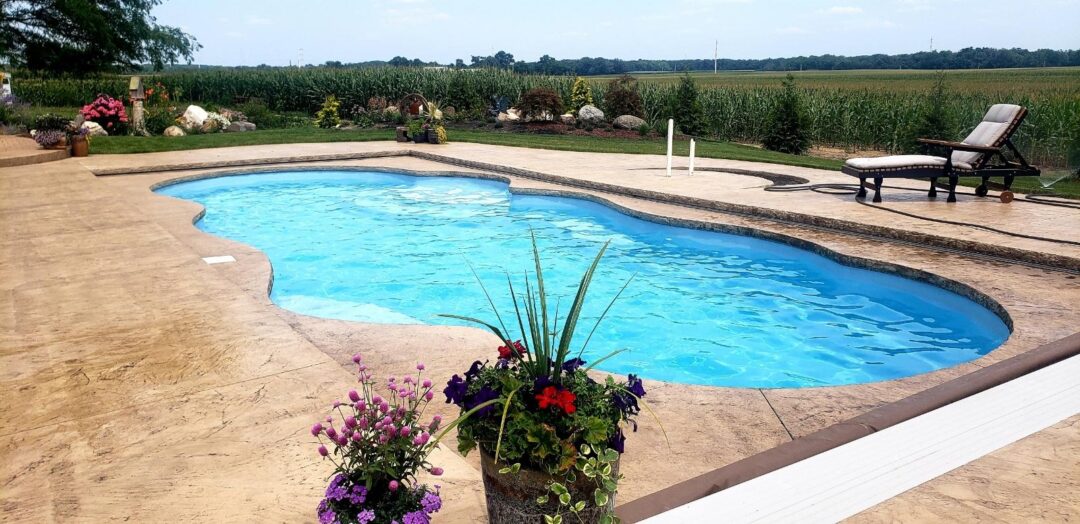
If you own an inground pool, especially a freeform pool, choosing the right pool cover can make a huge difference in maintenance, safety, and long-term costs.
Freeform pools are becoming a backyard favorite, and for good reason. These pools are, for many potential pool owners and existing pool owners alike, the closest you can get to a true backyard oasis. While that is great, on the flipside, their irregular shape makes freeform pools quite a bit harder to cover than traditional rectangular pools.
New pool prospects often find themselves asking which type of cover would be best for their pool: an automatic cover, a winter pool cover, or a solar pool cover? A freeform pool can be covered in a few different ways, but each option comes with its own advantages and drawbacks.
In this article, we’ll take a look at the best inground freeform pool cover options and break down which will be best for your pool, budget, and swimming needs. Let’s dive in.
Why Pool Covers Are Important for Inground Pools
Before discussing specific cover types, it’s helpful to understand why pool covers are so valuable for inground pools.
A properly installed cover can:
- Prevent heating loss and evaporation
- Keep dirt, leaves, and other debris out of the pool
- Improve safety around the pool area
- Lower chemical usage
- Lower maintenance and cleaning requirements
In regional climates like here in the Midwest, choosing a cover than can protect your pool throughout the winter offseason will make opening up your pool in the spring time much easier.
Standard Manual Pool Covers
For many homeowners with inground pools, standard manual pool covers remain one of the most practical and cost-effective options—especially for freeform pools that have curves or irregular shapes. Because these covers are flexible and custom-fit, they can be installed on nearly any pool design.
Manual covers typically fall into two main categories: mesh safety covers and solid winter pool covers. Both options are anchored around the perimeter of the pool using spring-loaded hardware installed in the deck, creating a tight and secure fit.
These covers are removed and installed manually, usually with a specialized installation tool. While they require more effort than an automatic pool cover, they are highly reliable and significantly lower in pool cover cost.
Mesh Pool Covers
A mesh pool cover is one of the most popular choices for inground pools. These covers are made from tightly woven material that blocks debris while allowing rainwater and melting snow to drain through.
Because water passes through the cover, homeowners typically do not need a pool cover pump when using mesh covers.
Advantages of mesh covers include:
- Lightweight and easier to install and remove
- Excellent drainage during winter months
- Durable material designed to handle snow loads
- Lower maintenance since water does not accumulate on top
However, mesh covers allow small amounts of fine debris and sunlight to pass through the material. This can sometimes lead to minor algae growth that needs to be addressed when opening the pool in the spring.
Solid Pool Covers
A solid pool cover provides a completely sealed barrier across the pool surface. Unlike mesh covers, solid covers block sunlight, debris, and water from entering the pool.
Because water cannot pass through the material, homeowners typically use a pool cover pump to remove rainwater or melted snow that collects on top of the cover during the winter.
Benefits of solid covers include:
- Maximum debris protection
- Reduced sunlight entering the pool, helping prevent algae growth
- Cleaner water when opening the pool in the spring
- Strong safety protection when properly anchored
The main consideration with solid covers is maintenance. Since water accumulates on the surface, regularly using a pool cover pump is important to prevent excess weight and extend the cover’s lifespan. Additionally, leaves and debris can stain your cover if left alone, requiring a cover cleaning.
Solar Pool Covers
Another common manual cover used during the swimming season is a solar pool cover. Unlike safety covers that anchor to the deck, solar covers float directly on the water surface.
These covers help retain heat, reduce evaporation, and lower chemical loss during the warmer months. While they are effective for energy efficiency, they do not provide safety protection like a winter pool cover or automatic pool cover.
When Manual Covers Make Sense
Manual covers are a great solution for many homeowners because they offer strong protection for inground pools without the higher investment required for an auto cover system. They are particularly effective for freeform pools where automatic systems may be more complex to install.
Although manual covers require more effort to handle each season, they remain a dependable and budget-friendly option for protecting your pool year-round.
Automatic Pool Covers for Freeform Pools
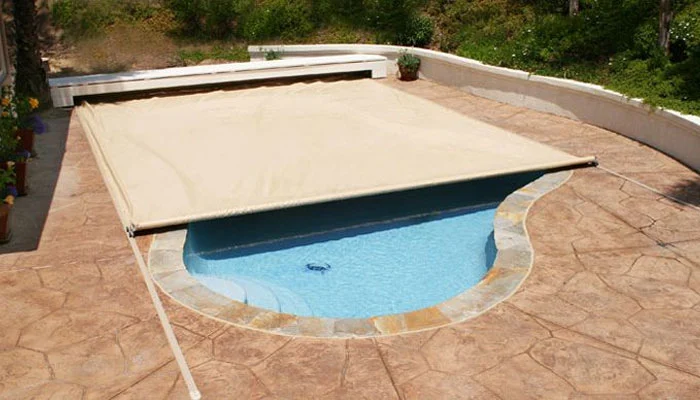
In the 21st century, convenience and efficiency are at the top of everyone’s priority list. For this reason, many homeowners today prefer automatic pool covers because of the convenience and safety they provide. If you’ve dealt with a manual pool cover for years, imagine your pool cover sliding open and closed with just the push of a button.
While traditional automatic covers are best for rectangular pools, certain systems are designed with freeform pool installation in mind.
Below are the most common types of auto cover systems used for freeform-shaped pools.
Deck-on-Deck Auto Cover Systems
A deck-on-deck auto cover system is one of the most versatile options for freeform pools.
With this setup, one tier of decking is poured flush with your pool, atop which an underguide track is installed before another layer of concrete is poured over it, giving the appearance of an underguide. This top layer of concrete sits flush with the rest of your pool patio.
Advantages
- Works well for many freeform shapes
- Easier installation
Considerations
The tracks remain visible on a raised deck, which may not match every homeowner’s aesthetic preferences.
Standard Top Track Automatic Cover Systems
Standard top track systems are built by drilling and anchoring a track along the edge of the pool. The anchor sits roughly 3/8 of an inch above the concrete surface.
This type of automatic pool cover works best for pools that are mostly rectangular but may include slight curves or design variations.
Advantages
- More affordable than hidden systems
- Reliable and easy to maintain
- Good option for existing pools
Considerations
The track system remains visible along the edge of the pool.
Flush Track (Recessed Top Track) Automatic Cover Systems
A flush track system, also known as a recessed top-track system, is designed to create a more seamless appearance.
In this design, the cover track is recessed into the deck or coping so it sits nearly flush with the surface. Although we do not install recessed top track systems, we recognize the benefits they offer and want you to be informed on all of your options.
Advantages
- Cleaner, more integrated appearance
- Less visible hardware around the pool
- Works well with many modern backyard designs
Considerations
- Higher pool cover cost
- Requires more planning during pool construction
- May not work with every freeform pool shape
Comparing Pool Cover Options for Freeform Pools
Below is a simple comparison of the most common pool cover types used with freeform inground pools.
| Pool Cover Type | Best For | Ease of Use | Maintenance Needs | Appearance | Durability | Typical Cost |
| Mesh Pool Cover | Winter protection for freeform inground pools | Manual | Low (no pump needed) | Clean, low-profile | High | Low |
| Solid Pool Cover | Maximum debris & algae protection | Manual | Moderate (requires pool cover pump) | Clean, low-profile | Very high | Low-medium |
| Deck-on-Deck Auto Cover | Freeform pools with curves & existing pools | Automatic (push button) | Low-moderate | Visible tracks on deck | High | Medium-high |
| Standard Top Track Auto Cover | Slightly curved or semi-freeform pools | Automatic | Low-moderate | Visible track along pool edge | High | Medium-high |
| Flush Track (recessed) Auto Cover | High-end backyard design & new builds | Automatic | Low | Minimal visible hardware (cleanest look) | High | High |
Other Equipment to Consider: Pool Cover Pumps
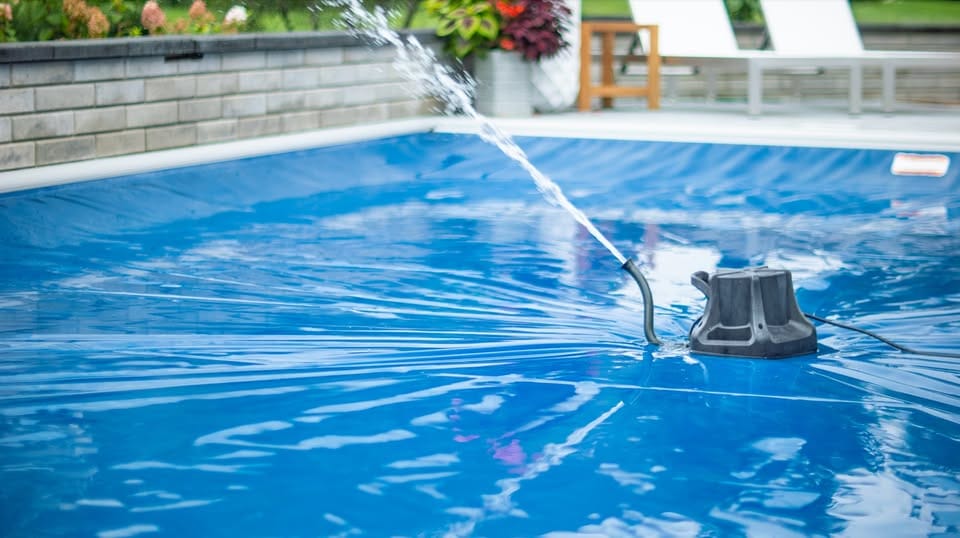
Regardless of the type of pool cover you choose, a pool cover pump is a great addition.
These pumps automatically remove rainwater and melted snow that accumulates on top of the cover. Without a pump, water buildup can stretch the cover or make removal more difficult in the spring.
A pool cover pump is especially useful in areas with heavy rain or snowfall.
What Is the Best Cover for a Freeform Pool?
The best cover for your freeform inground pool ultimately depends on your priorities.
If your goal is affordability, a winter or solar cover may be the best solution.
If you’re looking for maximum convenience and safety, an automatic pool cover is often the best long-term investment.
For many homeowners with freeform pools, deck-on-deck auto cover systems offer the best balance between functionality and installation flexibility. However, if aesthetics are important, a flush track automatic pool cover can create a more seamless look.
Choosing the Right Pool Cover for Your Backyard
Because every backyard and pool project is unique, the best cover option often depends on the pool’s shape, deck layout, and how you plan to use your backyard.
Working with an experienced swimming pool contractor can help ensure you choose a cover system that fits your pool correctly and performs well over time.
A properly selected pool cover can protect your investment, reduce maintenance, and make owning a freeform inground pool significantly easier.
If you’re considering adding a new cover system or upgrading an existing one, understanding your options is the first step toward making the best decision for your pool. If you have more questions about pool covers, check out the articles below. Dive into our learning hub at the top of our page for more educational content on all things pools, landscaping, and backyard design.
Auto Covers vs Manual Winter Covers: Cost, Pros and Cons
Winter Maintenance Guide for Automatic Swimming Pool Covers
Written by Logan Edgemon
We run pool openings and closings across Northwest Indiana. Packages and timing are on that page.