
What is a Plunge Pool? The Pros & Cons You Need to Know
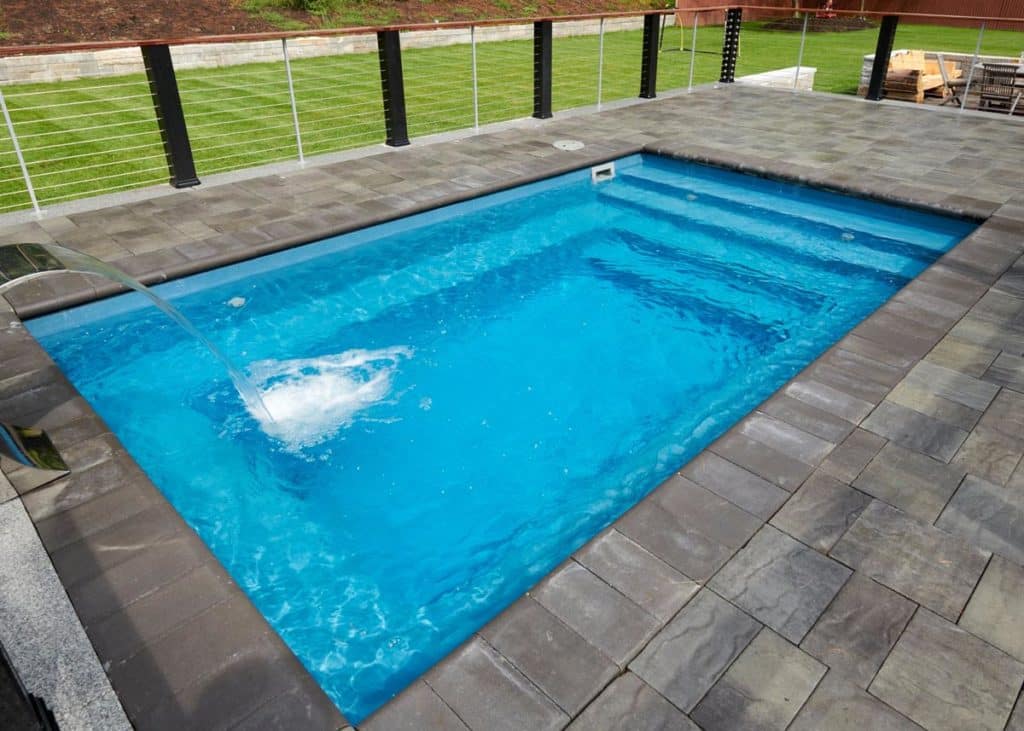
Why are inground pools so expensive these days? Are you considering purchasing a smaller pool to maximize your backyard and save money? These are great questions, and ones that can be answered with: plunge pools!
Plunge pools are not a new thing in the pool world. They have actually been around, in one way or another, for thousands of years. A plunge pool sits between a traditional pool and a spa, offering homeowners the versatility of both worlds while not taking up a huge chunk of their backyard space.
Here at Royal Pools G2 Landscaping, we understand and empathize with clients who are eager to have an inground pool installed, but unfortunately cannot financially support one or lack the yard space to accommodate one. Pools are a give and a take. You give a lot of money, and in return, you take from it years of memories.
Plunges are not for everyone, but they might be perfect for you. So, what exactly are they, and how should you know whether or not they’re the right fit for you? Let’s dive in.
What is a Plunge Pool?
A plunge pool is a small swimming pool designed for relaxation, cooling off, and light recreation rather than full-length swimming. Most range from:
- 8–20 feet long
- 6–10 feet wide
- 4–6 feet deep
Unlike traditional inground pools, plunges are built for:
- Cooling off on hot days
- Hydrotherapy and relaxation
- Small backyards
- Lower water volume and maintenance
In Northwest Indiana and the south suburbs of Chicago, plunges are becoming more popular because many residential lots have limited space or setback restrictions.
These pools can be installed as:
- Fiberglass plunge pools
- Precast plunge pools
- Small custom vinyl liner inground pools
- Even an above ground plunge pool in certain situations
Plunge Pool Cost?
One of the biggest reasons homeowners consider plunges is affordability. While costs vary based on installation type and site conditions, here’s a general cost range for inground plunges in Northwest Indiana & Chicagoland:
Fiberglass Plunge Pools (Installed)
$70,000 – $85,000+
Precast Plunge Pools
$25,000 – $75,000+
Factors That Affect Cost
- Excavation and access to your backyard
- Crane or delivery requirements
- Patio, decking, or landscaping
- Electrical and plumbing
- Heating or automation
- Local permits and inspections
While plunges are more affordable than full-size inground pools, the installation requirements in the Midwest still make them a significant investment.
Plunge Pool vs. Standard Pool
| Feature | Plunge Pool | Standard Pool |
|---|---|---|
| Size | Compact (under 20 ft) | 25–40 ft typical |
| Cost | Lower | Higher |
| Installation time | Faster | Longer |
| Yard space required | Small | Large |
| Swimming laps | Limited | Yes |
| Maintenance | Lower | Higher |
If your goal is laps, games, and entertaining large groups, a traditional inground pool may be a better fit. But for relaxation, space efficiency, and cost saving, plunges shine.
Fiberglass Plunge Pools vs. Precast Plunge Pools
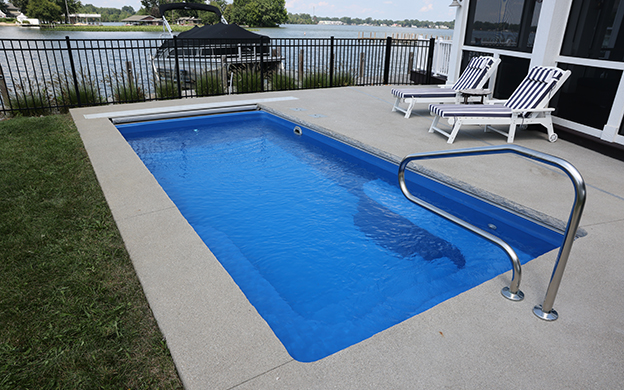
Fiberglass Plunge Pool
Pros
- Smooth, non-porous surface
- Low maintenance
- Fast installation
- Durable in Midwest freeze-thaw conditions
Cons
- Limited shapes and sizes
- Requires delivery access
Fiberglass is often the best choice for homeowners looking for long-term durability and minimal upkeep.
Precast Plunge Pools
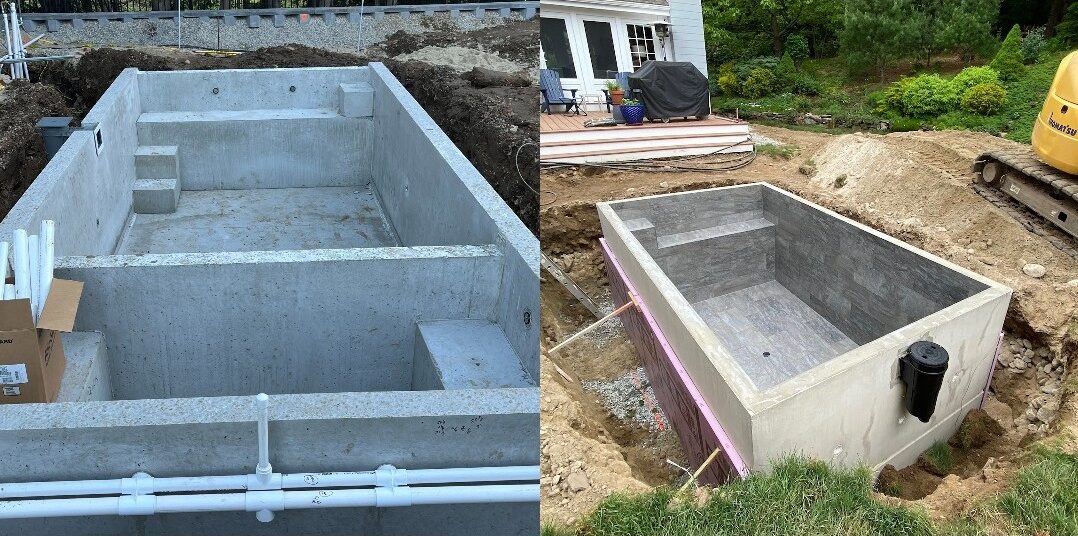
Precast plunge pools are factory-built concrete shells delivered to your home and installed in one piece.
Pros
- Modern, sleek designs
- Strong structural integrity
- Quick installation
Cons
- Higher weight and delivery requirements
- Less flexibility for customization
- May require crane access
Precast plunge pools are growing in popularity, especially for modern backyard designs.
Plunge Pros and Cons
Pros
- Lower cost than full-size pools
- Ideal for small backyards
- Reduced water usage
- Lower chemical and maintenance costs
- Faster installation
- Can be heated for year-round use
Cons
- Limited swimming space
- Not ideal for large families or entertaining
- Still requires excavation and permits (for inground installation)
- Delivery access can be challenging in tight lots
Can You DIY Install a Plunge Pool?
Some homeowners consider installing an above ground plunge pool or small prefabricated unit themselves. While less labor-intensive than traditional inground pool installation, DIY plunge installations still come with risks, including:
- Improper base preparation
- Drainage issues
- Structural failure
- Electrical and plumbing complications
- Local code violations
In Northwest Indiana and Chicagoland, most permanent plunges require permits and professional installation to ensure long-term performance and safety.
Popular Plunge Features and Add-Ons
Even small pools can feel like luxury retreats. Popular upgrades include:
- Built-in benches or tanning ledges
- Spa jets or hydrotherapy systems
- Pool heaters for extended seasons
- Automatic covers
- LED lighting
- Saltwater systems
- Integrated patios or brick paver decking
Because plunges are smaller, many homeowners invest more in premium features.
Is a Plunge Pool Right for You?
A plunge may be a great choice if:
- You have a small backyard or a tight lot
- You want a lower-cost alternative to traditional inground pools
- Your primary goal is relaxation, not swimming laps
- You want lower maintenance and operating costs
- Local setbacks or space restrictions limit pool size
However, if you want a pool for large gatherings, active swimming, or growing families, a standard inground pool may provide better long-term value.
Conclusion
Plunge pools are a smart solution for homeowners who want the experience of an inground pool without the size, cost, or maintenance of a full-scale installation. If you’re considering a plunge pool, the key is choosing the right option for your space, budget, and long-term goals.
At Royal Pools G2 Landscaping, we help homeowners throughout Northwest Indiana and South Chicagoland evaluate whether a plunge pool or a traditional inground pool makes the most sense for their property.
If you’re exploring plunge pool options and would like a quote, click here. For more information on inground pools, check out the articles below or head over to our learning hub. Thank you for reading. Have a great day!
Six Great Small Fiberglass Pool Designs
Fiberglass Pool Maintenance: How To Master Your Pool
Written by Logan Edgemon