
How To Maintain a Brick Paver Pool Patio in Northwest Indiana?
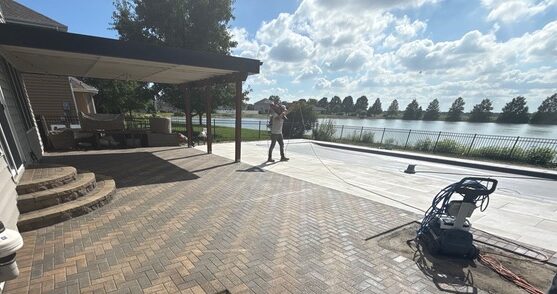
When it comes to inground pool patios in Northwest Indiana, homeowners tend to choose one of a few options: brick pavers, standard concrete, or stamped concrete. All three can completely transform your backyard space, highlighting your inground pool. The question is which material suits your backyard needs? And furthermore, how much maintenance are you willing to do on your patio?
Let’s talk about brick pavers. Brick pavers have been a classic choice of pool patio for decades. In Northwest Indiana, homeowners love the aesthetic and functional versatility that brick pavers provide, as they come in hundreds of color options and sizes and blend with any backyard design.
One thing you may or may not know about brick pavers is that they cost more than concrete and require more maintenance, which adds to the lifetime ownership cost. Regular paver maintenance is the key to keeping your patio clean, safe, and beautiful. Midwest weather features heavy rain, humid summers, and, of course, snow and freeze-thaw cycles. All of these can have an effect on your concrete over time.
Royal Pools G2 Landscaping builds fiberglass and vinyl liner pools and custom backyard designs for homeowners across Northwest Indiana and South Chicagoland. We’ve built hundreds of paver pool patios, walkways, and more over the years.
Maintaining your brick pavers is essential, yet some homeowners don’t do it simply because they don’t know how. In this article, we’re going to solve that problem for you. Let’s break down how to maintain your brick paver pool patio.
Why Brick Pavers Are Popular Around Inground Pools
No product is perfect. This applies to cars, furniture, pools, you name it. Brick pavers aren’t perfect, but they do offer a handful of advantages that other materials don’t, including:
- Enhanced durability in freeze-thaw climates
- Easy repair if individual pavers become damaged
- Wide selection of colors, textures, and patterns
- Luxurious appearance that enhances backyard design
Whether you have a large brick paver pool patio, a decorative brick paver driveway, or a paver walkway, regular maintenance helps preserve the beauty and structural integrity of your hardscape.
1. Keep Your Pavers Clean Throughout the Season
Here in Northwest Indiana, your patio is liable to accumulate dirt, pollen, leaves, and debris over the summer season. It’s in your best interest to keep your paver pool patio as clean as possible throughout all seasons.
Recommended Cleaning Routine:
- Sweep weekly to remove dirt and debris
- Rinse with a garden hose regularly
- Use a leaf blower around pool areas
- Remove standing water after heavy rain
Soap and water can remove most stains that may appear on your paver patio. Be sure to read labels and always use paver-safe cleaning materials. Never use harsh chemicals that could degrade the paver surface or affect your pool’s water chemistry.
2. Refill Joint Sand When Needed
You may be wondering what goes in between each paver to keep the whole area intact. There are a few types of joint material available, the most popular being polymeric sand.
Polymeric sand is a favorite for many landscape companies as it inhibits weed growth. We’ve all seen weeds growing between pavers. They are not a pleasant sight. Polymeric sand is strong, but over time, rain and snow can wash away some of the sand, requiring refills.
Missing joint sand can lead to:
- Loose or shifting pavers
- Weed growth
- Ant infestations
- Water erosion
- Uneven surfaces
Be on the lookout for gaps between your paver bricks. Those are a quick indicator that the joint sand between your pavers has either degraded or been partially washed away.
Inspect your paver bricks in the spring after the ground has finished thawing for any gaps, shifts, or sunken bricks.
3. Seal Your Brick Paver Patio
Resealing pavers is a point of contention for many. Most paver manufacturers and landscaping companies recommend resealing your patio every 3 – 5 years. Resealing provides numerous benefits that enhance your patio’s look and extend its lifespan, including protection from UV, weed/moss growth prevention, resistance to pool chemicals, etc.
Be sure to thoroughly clean your patio before resealing. If you use a pressure watcher, be mindful of your pavers. Maintain pressure washer PSI between 1000 and 1500 to prevent pavers from chipping away. Allow pavers to dry 24 – 48 hours before sealing.
Acrylic-based sealers, such as Supersheen 350, are recommended to enhance paver color and add a fresh look to the patio.
Whatever sealer you choose, you must apply it equally and consistently across the whole patio area to prevent any noticeable aesthetic differences. If you’re unable to reseal the patio yourself, consider hiring a professional landscape company to reseal it for you.
4. Address Winter Damage Early
As we previously stated, it is important that you inspect your paver patio for any possible winter damage in the spring. As the ground freezes and thaws over the winter, the contraction and expansion can cause your pavers to shift or settle.
In early spring, check your paver pool patio for:
- Uneven pavers
- Trip hazards
- Cracked edging
- Drainage problems
- White deposits on pavers (efflorescence)
One huge advantage of brick pavers is that they are easily repairable. If one or a few brick pavers fail, they can be either lifted and reset or replaced without having to replace the entire patio, unlike concrete.
5. Maintain Proper Pool Water Chemistry
Considering we’re talking about brick paver pool patios, we’d be remiss not to mention that water chemistry affects brick pavers as well. High chlorine, low or high pH, and salt can all affect your brick paver patio surface over time.
When maintaining your inground pools, avoid:
- Allowing chlorinated water to continuously overflow onto pavers
- Allowing pool chemicals to splash onto the pavers
Pool maintenance and paver maintenance go hand in hand when your pool is surrounded by pavers. Maintaining balanced water chemistry protects both the pool and the paver pool patio. As a reminder, balanced water chemistry looks like:
- Chlorine/Bromine: 1 – 3 PPM (Free and total chlorine should be equal)
- pH: 7.2 – 7.8 (7.2 – 7.4 in fiberglass pools)
- Alkalinity: 80 – 120 PPM
- Calcium Hardness: 175 – 350 PPM (under 120 PPM in fiberglass pools)
- Cyanuric Acid: 0 – 50 PPM
- Salt levels: 2700 – 3400 PPM (exact range may vary depending on the brand of salt chlorine generator)
6. Protect Your Patio Furniture and Accessories
Attention all furniture draggers: did you know that heavy patio furniture can scratch or damage the surface of your brick paver patio over time? Surely you’ll want some patio furniture to bring your space to life. That’s a great idea. Be sure to use protective pads on furniture, grills, fire pits, etc. Do not drag these items across your paver patio.
Furthermore, during the winter, make sure to:
- Avoid metal snow shovels
- Do not use harsh rock salt products
- Use paver-safe ice melt products only
See guys? Just a few small precautions can radically reduce any potential damage to your paver pool patio.
Conclusion
There you have it, folks. If you live anywhere with seasonal weather changes, as we experience in Northwest Indiana, you know that the weather changes can be particularly harsh on your hardscaping. Proper paver maintenance, including regular cleanings, joint sand care, and sealing, combined with proper pool maintenance, will keep your paver pool patio looking new for years to come.
If you’re interested in a paver pool patio around your new inground pool, or perhaps adding a brick paver walkway or driveway, be sure to weigh these maintenance considerations before committing.
Here at Royal Pools G2 Landscaping, providing premium outdoor services to homeowners throughout Northwest Indiana and South Chicagoland is our pride and joy. We hope you found this article helpful. For more information on pavers and hard scapes, check out the articles below. Dive into our learning hub at the top of the page for more educational content on all things pools, landscaping, and concrete. Thanks for reading. Have a great day.
Brick Paver Cost in Northwest Indiana in 2026
Brick Pavers vs Concrete: Which is Best for Your Backyard?
Pros and Cons of Concrete Pool Decks
Written by Logan Edgemon
We design and build the whole backyard, not just the pool. See our landscaping and hardscaping work.