
Backyard Bliss: Decking Decisions
Designing your backyard can be overwhelming, especially when it comes to choosing the right patio or AKA decking.
At Royal Pools G2 Landscaping, we believe in spending quality time with our clients, discussing the multitude of options available. This guide aims to offer insights into backyard decking essentials, covering patio square footage, various decking options, and also talk about pool coping options.
Join us as we share our knowledge and experiences to help you make informed decisions for your outdoor space!
How Much Of A Patio Do I Need?
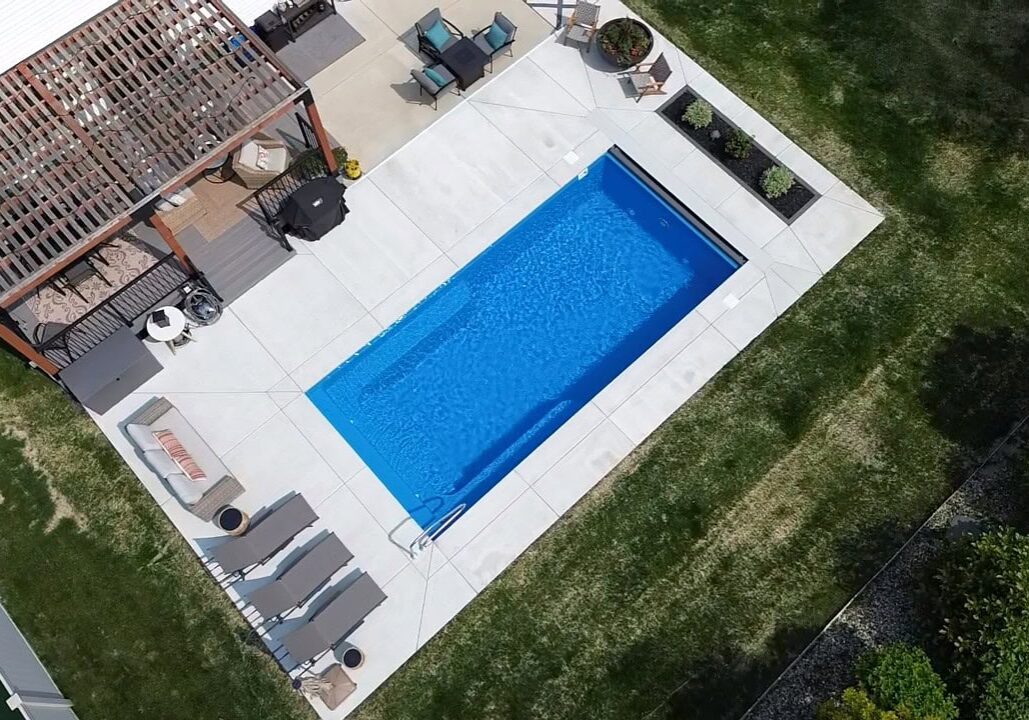
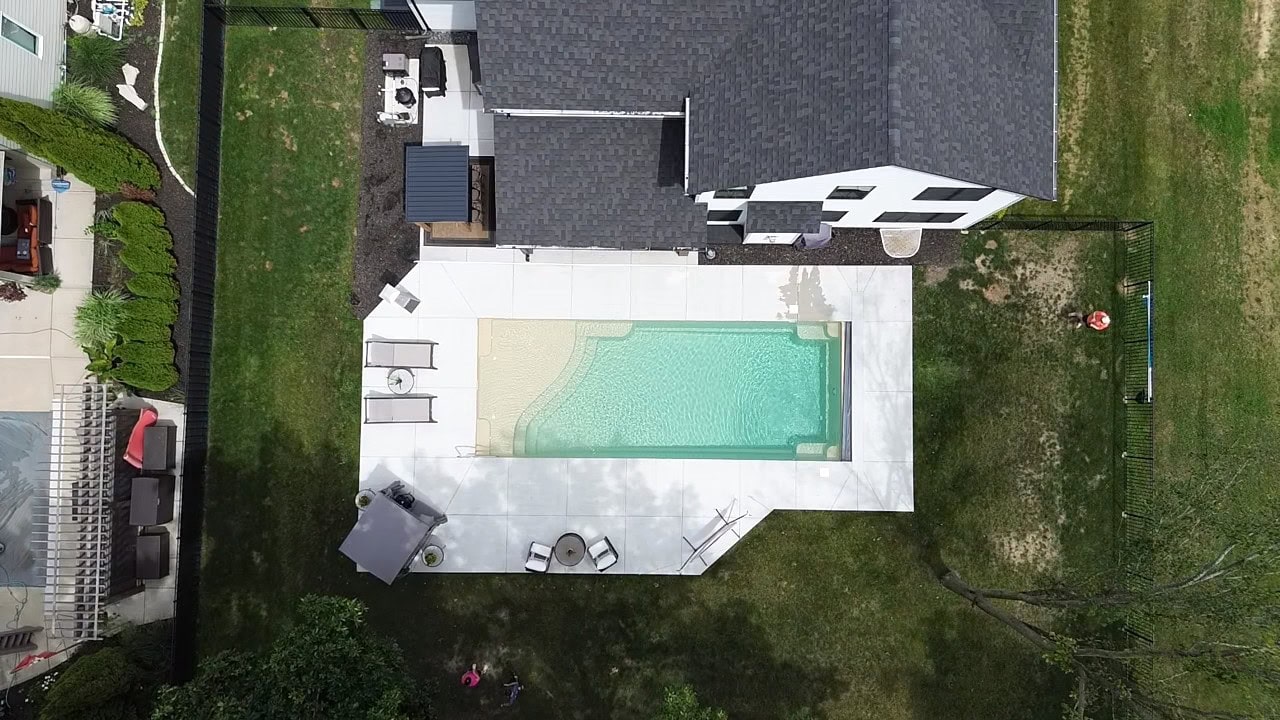
Typically, clients initially plan for a functional poolside space of 700 to 900 square feet of decking. However, in our experience, we commonly observe an average closer to 1200 to 1400 square feet. This notable difference underscores a crucial consideration in patio design around a pool—the size of gatherings you envision in your backyard. Those opting for 700 to 900 square feet often entertain smaller groups or prioritize family enjoyment. On the other hand, those aiming for 1200 to 1400 square feet frequently host larger gatherings or possess extensive furniture sets.
It's evident that after the challenging times of the pandemic, there's been a substantial surge in decking square footage investments as people redirected funds toward enhancing their outdoor spaces rather than traveling. While this doesn't imply that everyone necessarily needs larger decking areas, it does indicate an emerging trend towards expansive outdoor designs that compliment the home design by giving it a resort-like feel but in your own backyard!

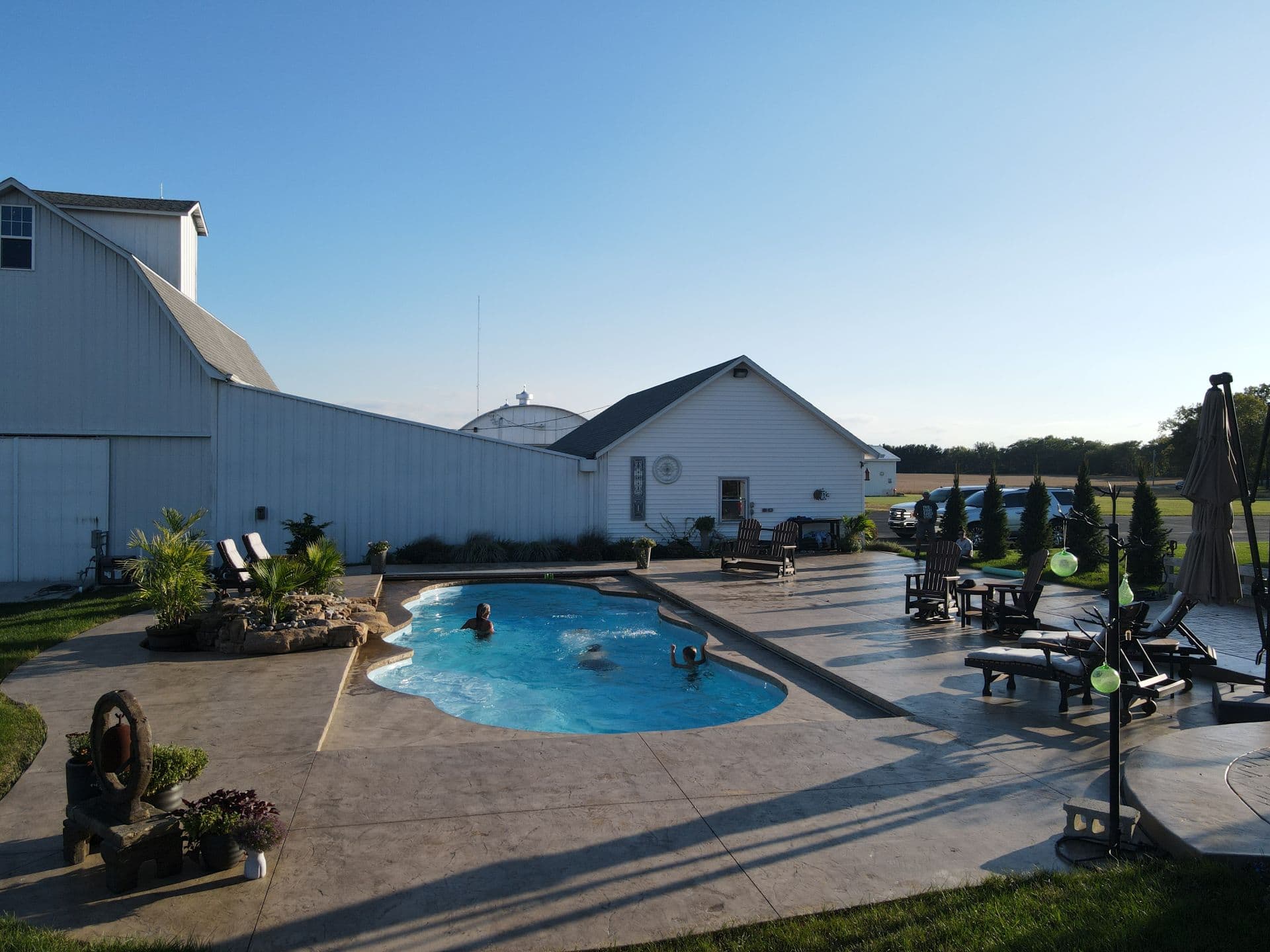
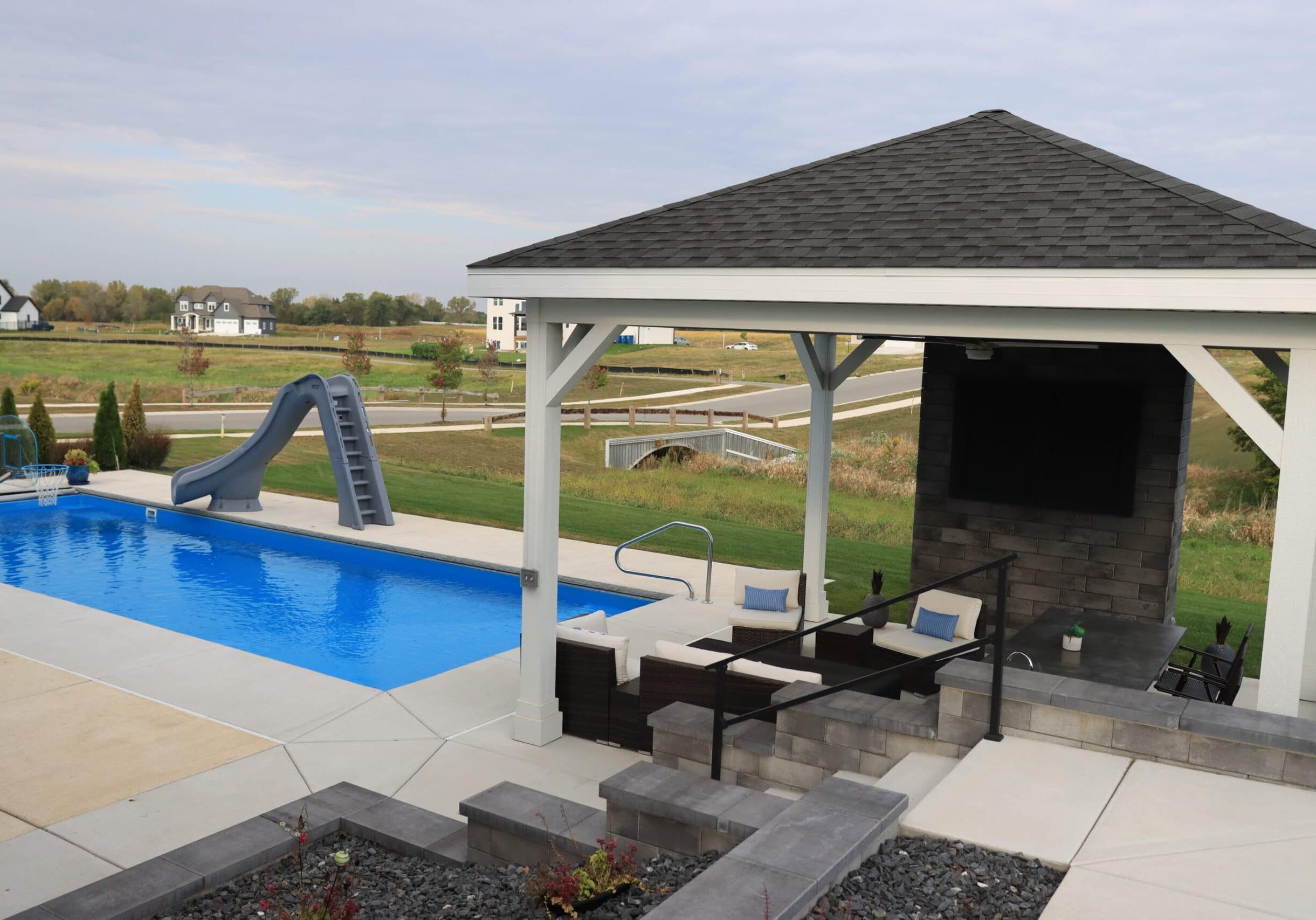
What To Consider When Thinking About How Much Space You Need
Functionality is pivotal when contemplating the required space. Similar to your kitchen or living room, a seamless flow is essential. Below, you'll find a comprehensive list of considerations to ensure optimal functionality in the most common areas we see congregations of people.
The Wide Variety Of Pool Decking Options
The world of pool decking options is vast, ranging from traditional broom-finished concrete, stamped concrete, brick pavers to luxurious natural stone and even raised outdoor porcelain tiles with hidden-draining systems. While I won't delve into all the possibilities, I'll focus on those best suited for the climate prevalent in the Midwest region of the country.
Here's a structured approach to cover each material independently, detailing their characteristics, average cost per square foot, and the pros and cons tailored to the Midwest climate.
Broom-Finished Concrete
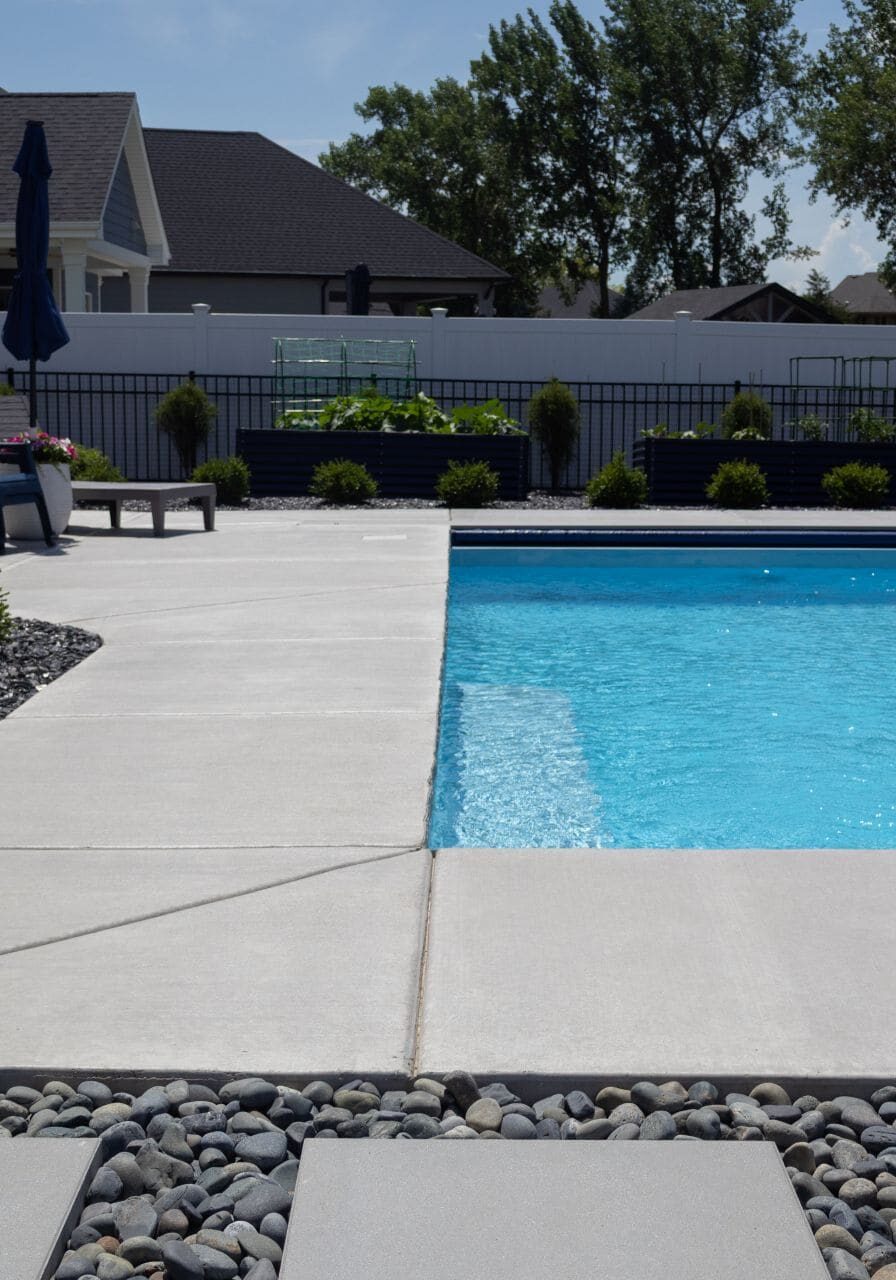
Broom-finished concrete offers a classic, textured appearance and is a popular choice for its affordability and durability. Overall broomed concrete is reliable and the cheapest form of decking to get around your pool.
Pros of Broomed Concrete:
- Affordability: Cost-effective compared to other materials.
- Durability: Long-lasting and resistant to harsh weather conditions.
- Low Maintenance: Easy to clean and maintain.
Cons of Broomed Concrete:
- Limited Aesthetics: May lack the aesthetic appeal of other materials.
- Potential for Cracking: Susceptible to cracking over time.
Average Cost
Cost will vary by region and material used. RPG2 charges roughly $14 per square foot of broomed concrete.
Stamped Concrete
Broom-finished concrete offers a classic, textured appearance and is a popular choice for its affordability and durability. Overall broomed concrete is reliable and the cheapest form of decking to get around your pool.
Overall, stamped concrete offers a cost-effective way to achieve the look of more expensive materials, but it requires proper installation and maintenance to ensure longevity and preserve its aesthetic appeal.
Pros of Stamped Concrete:
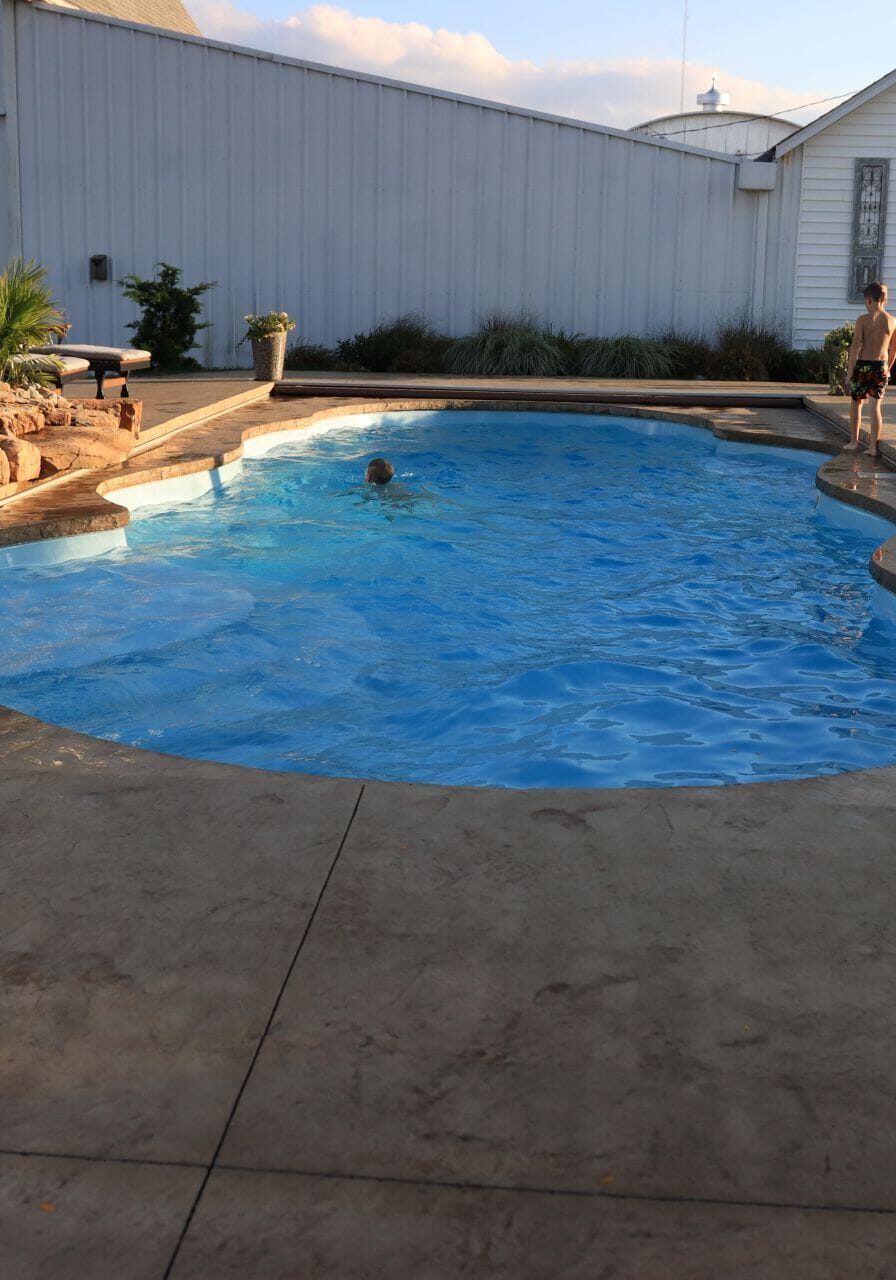
- Aesthetic Versatility: Available in a wide array of patterns, colors, and textures, offering versatility in design to mimic various materials.
- Cost-Effective: Often more affordable than using authentic materials like brick or stone. Cost runs about $18 - $20 per square foot.
- Durability: Concrete is durable and can withstand harsh weather conditions when properly installed and maintained.
- Low Maintenance: Requires minimal maintenance being that it has to be sealed every 2 years.
- Customization: Can be tailored to match the aesthetic preferences of the homeowner. It is about 90% customizable but expect prices to increase the more custom you go.
Cons of Stamped Concrete:
- Potential for Cracking: While durable, stamped concrete may develop cracks over time due to weather changes or settling.
- Installation Complexity: Requires skilled professionals for proper installation to avoid issues with texture or pattern inconsistencies.
Concrete FYI
There are two things guaranteed in this world: one that you have to breathe to survive, and two that concrete will crack. It's almost like concrete has commitment issues!
Concrete does indeed have a mind of its own when it comes to cracking! The mystery behind when and where it will crack remains unpredictable. Generally, there are two primary types of cracks that commonly occur in concrete: surface cracks and structural cracks.
Surface cracks are a common occurrence in concrete and are typically considered a natural part of the material's behavior. These cracks are often a result of factors like shrinkage, minor settling, or temperature changes during the curing process. Because they're considered unavoidable and generally don't compromise the structural integrity of the concrete, they're never covered by warranties offered by concrete contractors
On the other hand, structural cracks run deeper and are more concerning as they affect the integrity of the concrete. These cracks are often caused by more serious issues such as poor soil preparation, excessive load-bearing, or improper construction practices. Identifying and addressing the cause of structural cracks is crucial to maintaining the structural stability of the concrete. Structural cracks should be covered by a concrete contractor under their Labor and Quality Workmanship clause.
Brick Pavers
Brick pavers are individual units or bricks made from concrete. These materials offer a range of aesthetics, durability, and costs suitable for the Midwest climate, allowing homeowners to select based on their preferences and budget while considering the weather conditions in the region.
Pros of Brick Pavers:
- Aesthetic Appeal: Classic, modern or versatile design options.
- Repairability: Individual bricks can be replaced if damaged.
Cons of Brick Pavers:
- Higher Cost: More expensive than broomed and stamped concrete.
- Maintenance: Requires occasional resealing to maintain appearance.
Average Cost per Square Foot
Around $25 to $35 per square foot.
Brick Paver FYI
Brick pavers, being a concrete product, are susceptible to cracking and settling over time. While these occurrences aren't entirely abnormal, they should be addressed promptly, especially if they happen within the contractor's specified "Labor and Quality Workmanship" period.
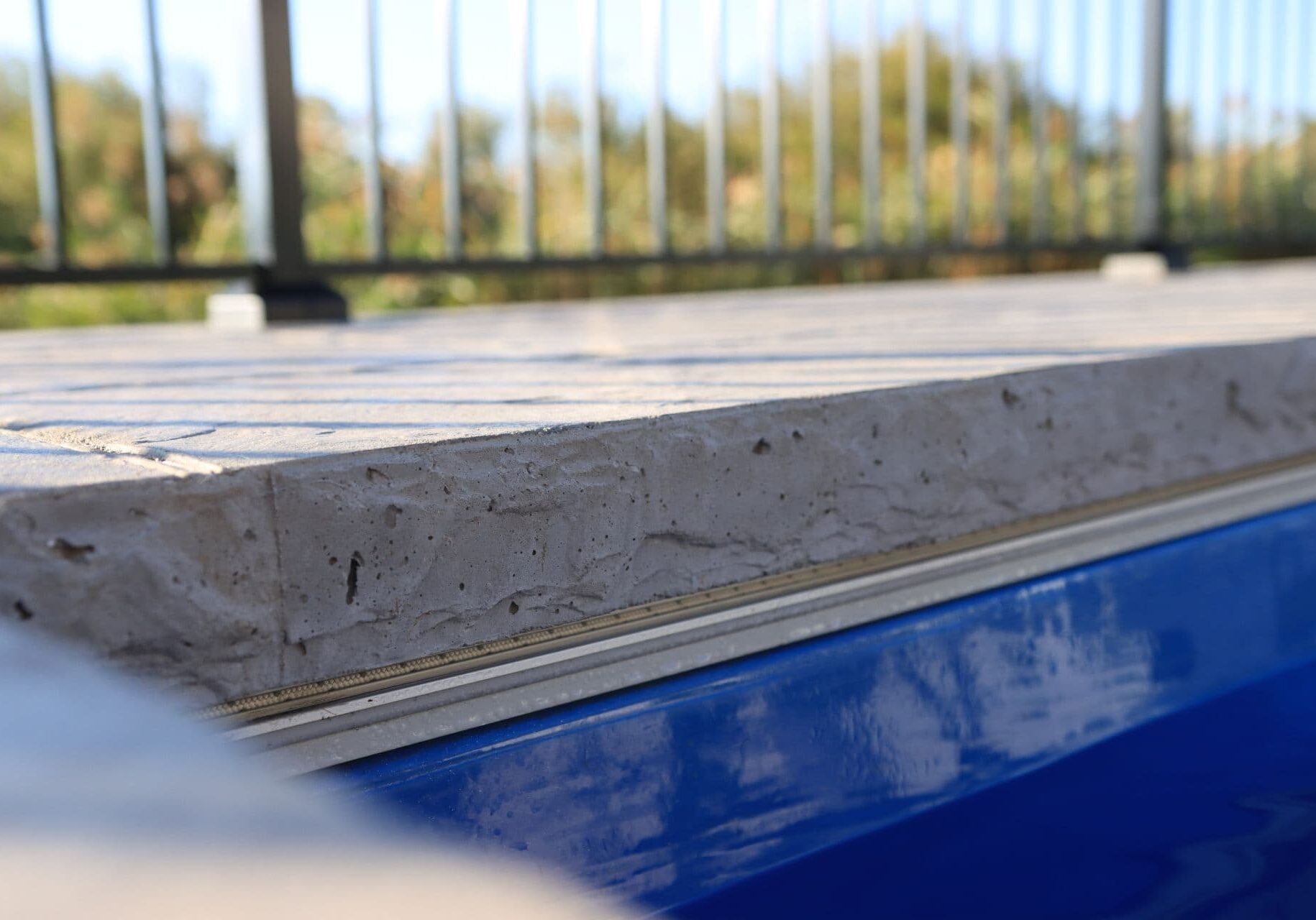
Pool Coping
Coping plays a pivotal role in the aesthetics of a pool, serving as the innermost perimeter that accentuates the pool's boundary. Typically measuring between 9 to 18 inches wide, coping materials vary from concrete and brick pavers to natural stone and tile. This edge, slightly overhanging the pool, can feature square, bullnose, or chipped stone finishes.
Pool Games and Furniture
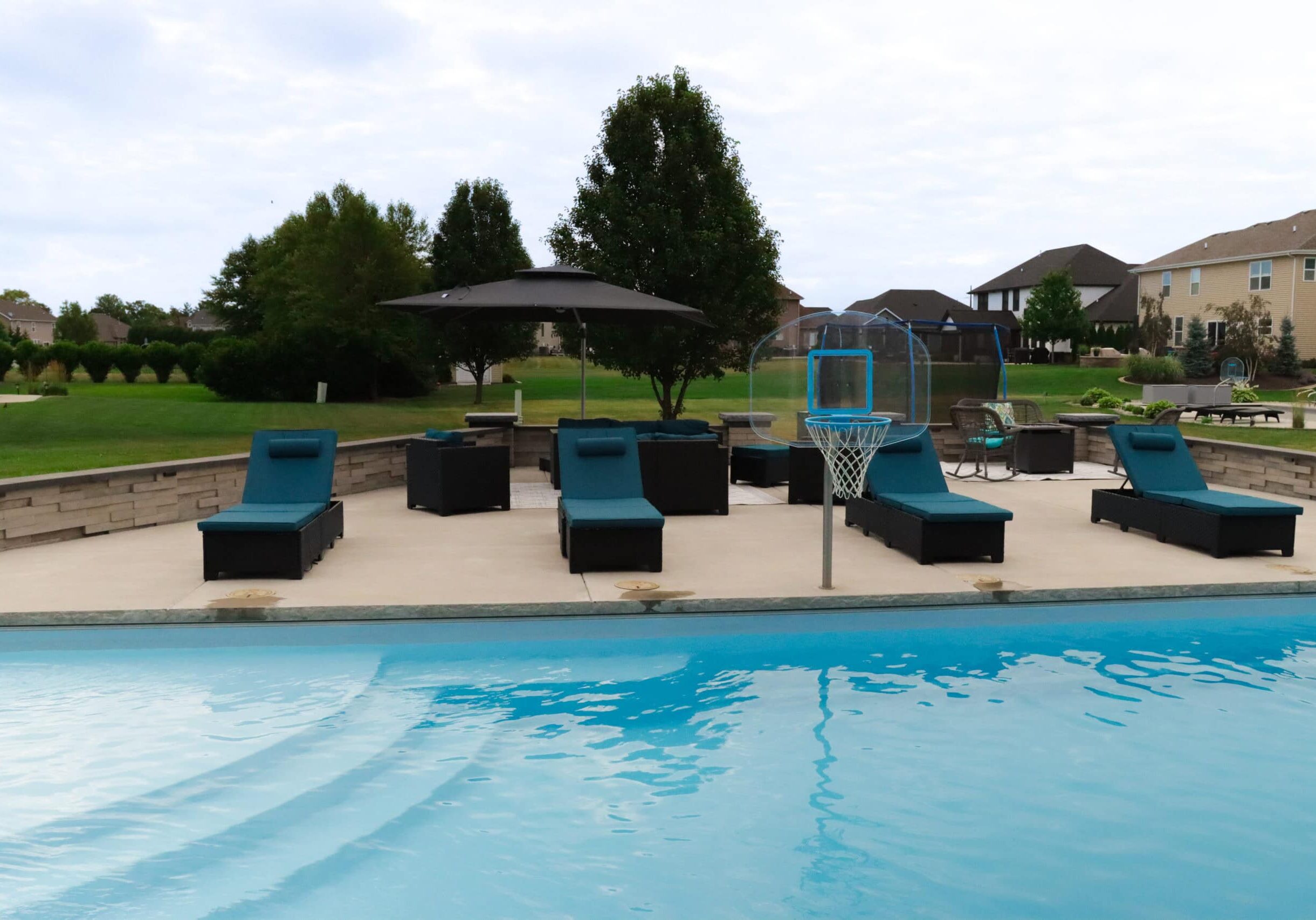
Basketball and volleyball can make for the best memories in your swimming pool. They can be cast in concrete and removable or set on the patio with a water filled base to be moved around. There is nothing better than competing against friends and family in a water sport. Just be sure your team takes the shallow end 😉
- Concrete Cast Average Cost:
$2,200.00 – $3,500.00 - Portable Average Cost:
$100.00 – $800.00
I hope that helps!