
Brick Paver Cost in Northwest Indiana in 2026

So you’re thinking about upgrading your backyard this year, but you’re stuck. Let me guess: “I just can’t decide if I want to use concrete or brick pavers for my deck and walkways.” You’re not alone. Hundreds of homeowners have been in your exact position before. We’re here to help.
Your choice of decking material will ultimately depend on your budget. Now you may be thinking, “Well, I’m really into pavers… but how much do they cost?” That’s a great question, and one we’d love to answer for you.
In this article, we’ll break down the cost of brick pavers in 2026, here in Northwest Indiana and South Chicagoland. Royal Pools G2 Landscaping has designed, installed, and maintained hundreds of inground pools, brick paver and concrete decks, and backyards over the past 26 years. We know that cost is the #1 factor in most backyard design buying decisions.
Why do brick pavers cost so much? What affects their pricing? Are brick pavers even worth it these days? How do I maintain brick pavers? We’ll answer all these questions and more in the article below. Let’s dive in.
Average Brick Paver Patio Cost in Northwest Indiana
We all know prices fluctuate, and brick pavers are no different. On average, for brick pavers in 2026, Northwest Indiana homeowners will spend anywhere from:
- $30 – $45 per square foot for a professionally installed brick paver patio
- $3,000 – $4,500 for a standard 10×10 patio project
- $24,000 – $36,000+ for larger 20×40 custom outdoor living spaces and pool patios
Homeowners will save money on a small, simple patio, while larger entertainment spaces with upgraded features such as lighting, seating walls, or custom patterns cost more.
Brick paver patio installation around an existing inground pool will cost even more due to excavation, drainage, and potential expansion of the patio area.
What Impacts the Cost of Paver Bricks?
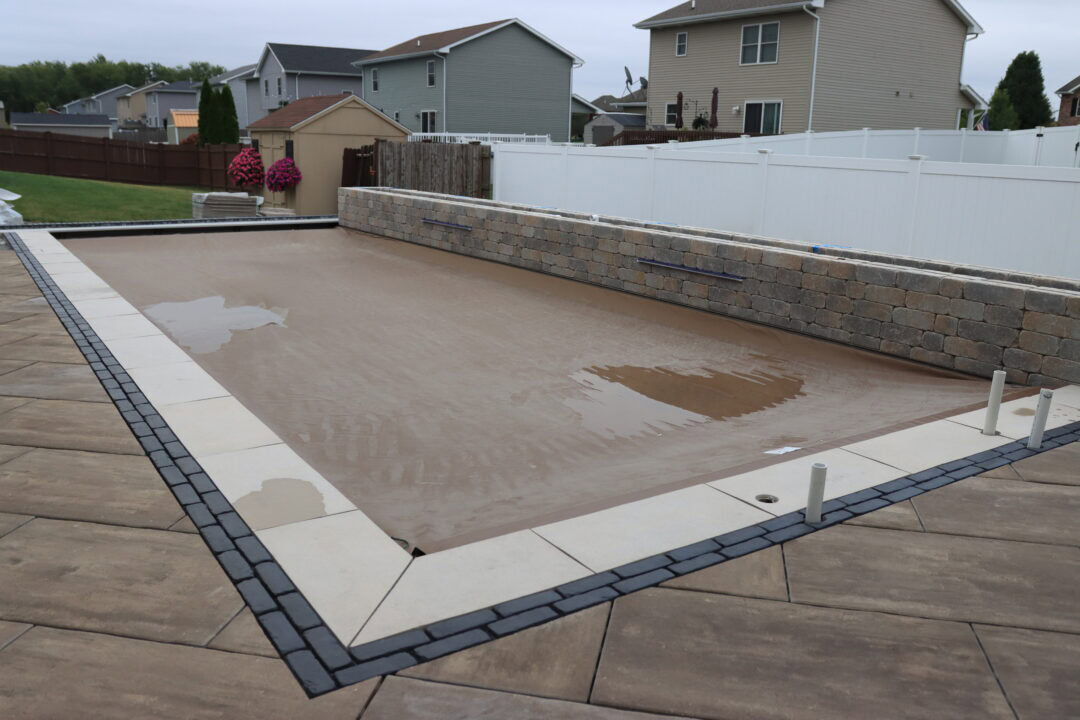
The price of brick pavers depends on several factors, including:
1. Size of the Patio
It’s simple in construction, folks. The more material required, the more labor necessary, the more expensive the project will be. If you’re expanding your patio size to accommodate upgraded features like retaining walls and walkways, that will drive the cost up even more.
Brick paver patios vary in size, including:
- Small patios: 200 – 300 sq. ft.
- Medium patios: 400 – 600 sq. ft.
- Large entertainment areas: 800 – 1,500+ sq. ft.
Many homeowners with inground pools choose larger layouts to accommodate lounge chairs, dining spaces, fire pits, and outdoor kitchens.
Homeowners looking to upgrade their inground pool patios often install larger patio spaces to accommodate features such as outdoor kitchens, shade structures, fire pits, and conversation pits. These features help transform your brick paver patio into a true social gathering space.
2. Type of Paver Bricks
We swimming pool contractors love to say, “Not all pools are made equal.” Well, the same thing goes for brick pavers.
Common options include:
- Concrete pavers (most durable and aesthetically versatile)
- Clay brick pavers
- Natural stone pavers
- Flagstone pavers
- Bluestone pavers
Higher-end paver types (Flagstone and Bluestone pavers) with advanced color blends and textured finishes will certainly come at a higher price while also providing a more luxurious appearance.
3. Design Complexity
Straightforward rectangular patios are less expensive than intricate custom layouts.
Features that increase costs include:
- Curved borders
- Multiple elevation changes
- Decorative inlays
- Custom patterns
- Built-in lighting
- Seating walls
- Steps and transitions
A custom brick paver patio designed around a freeform pool shape will naturally require more cutting, labor, and craftsmanship than a simple square patio.
4. Excavation and Base Preparation
You’d be forgiven for forgetting that before a new patio and backyard design is possible, your yard as it is, must be torn to shreds. A brand new brick paver patio always requires some excavation and a base preparation process.
Here in Northwest Indiana, ground and base preparation is vital to prevent paver shifting and settlement over time.
Professional installations typically include:
- Excavation
- Geotextile fabric
- Compacted aggregate base
- Sand bedding layer
- Edge restraints
- Polymeric joint sand
If the foundation for a brick paver patio is not solid, then it will not last. It may last for some time, but eventually, you will notice portions of the patio sinking. You must hire a reputable local landscaping company capable of setting a proper brick paver foundation for your patio to ensure maximum durability and longevity from the pavers.
Maintenance Costs for Paver Patios
The deck maintenance required on brick pavers is fairly standard for deck types. Seasonal cleaning and removal of dirt, debris, stains, and weeds are the primary concerns.
However, the mortar material between the bricks can deteriorate due to elemental exposure over time and will need to be replaced every 10 – 20 years, depending on weather conditions.
Typical maintenance includes:
- Pressure washing
- Re-sanding joints
- Sealing pavers
- Weed prevention
- Minor leveling repairs
Additionally, when compared to standard and stamped concrete, pavers are simpler and less expensive to repair because individual sections can be replaced without major demolition.
If one brick paver cracks, you can easily replace it without having to tear up and replace the entire area, the way you have to with concrete decks. Want more information on concrete vs. pavers? Check out this article.
Are Pavers Worth the Investment?
We cannot answer this question for you. Ultimately, the answer depends on your budget and decking needs.
Brick pavers do cost more than concrete decking, but the durability and aesthetic versatility they provide make them hard to turn down for many homeowners.
If the potentiality of a concrete crack is all that is preventing you from going with concrete over pavers, you should choose pavers.
Concrete always cracks. Despite installers, such as ourselves, putting in preventative measures to prolong concrete cracking, it will happen anyway, and when it does, you may have to replace your entire patio. That’s not something you have to worry about with pavers.
Conclusion
There you have it, folks: the cost of brick pavers in 2026 in Northwest Indiana. As a reminder, the cost of pavers, like most products, fluctuates depending on the scope and size of your project, as well as the type of paver and quantity you choose to have installed.
Brick pavers are great for patios, walkways, landscape accenting, driveways, swimming pool borders, and more. Whether you’re looking to install a new paver pool deck or build a small walkway, the versatility of different paver types gives you plenty to choose from. The question is: are brick pavers right for you?
For more information on brick pavers and other decking materials, check out the articles below. For more educational content on all things pools, concrete, landscaping, and backyard design, feel free to dive into our learning hub at the top of our page. Thanks for reading. Have a great day.
Pros and Cons of Concrete Pool Decks
Top 3 Brick Paver Designs of 2025
The Top 3 Problems with Concrete Brick Pavers
Written by Logan Edgemon
We design and build the whole backyard, not just the pool. See our landscaping and hardscaping work.