
How Weather in Northwest Indiana Affects Pool Maintenance
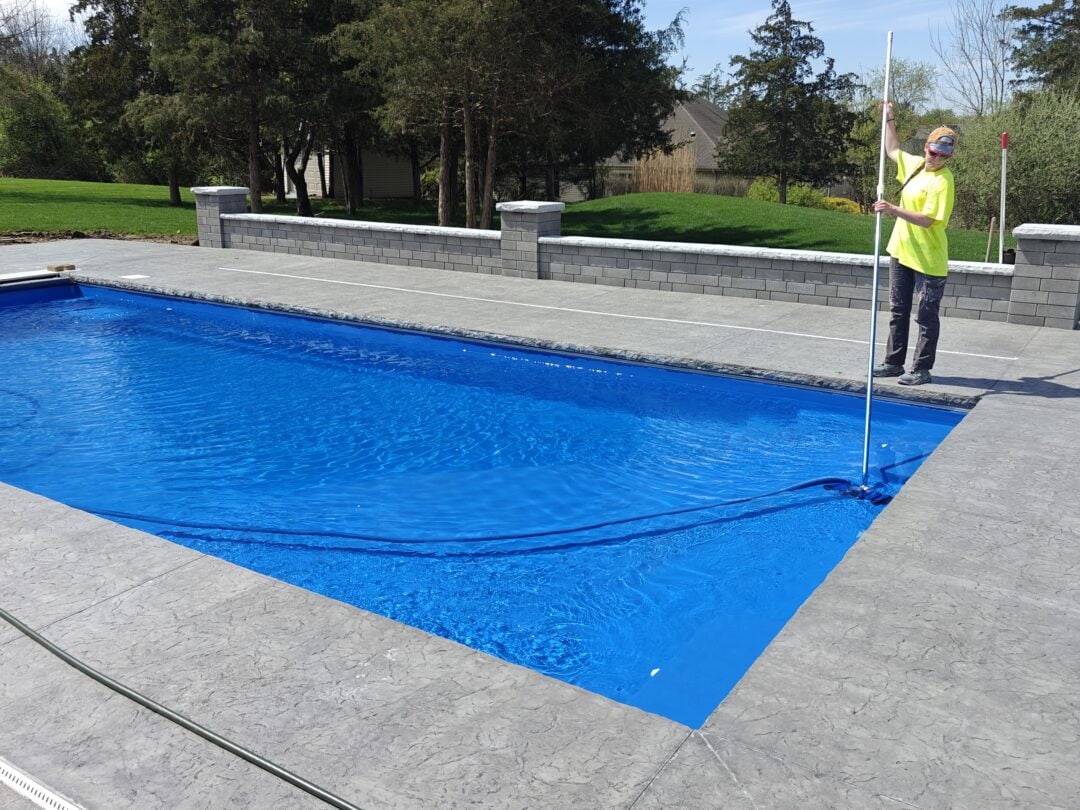
Here’s the thing, though, different regions approach “pool season” differently. Obviously, here in the Midwest and regions that experience all four seasons, pool owners can’t keep their pool open all year-round, the way pool owners in year-round warm climates can. Basically, we are at the mercy of the seasons. Seasonal weather changes can affect pool maintenance, water chemistry, and equipment performance.
You may not realize it, but weather conditions play a fairly big role in how you maintain your pool. Pools are luxury products, guys. They should be cared for as such.
For over 26 years, Royal Pools G2 Landscaping has installed inground fiberglass pools and vinyl liner pools for homeowners in Northwest Indiana and South Chicagoland, also providing inground pool maintenance to pool owners in the area. Understanding local weather conditions and working around them is what separates good contractors from mediocre ones.
Here’s how the weather in Northwest Indiana affects pool maintenance, and why you might consider working with an experienced swimming pool contractor and/or local pool service provider to save money and valuable swim time. We hope this article shows you how to avoid costly repairs and keep your water clean, clear, and swimmable. Let’s dive in!
Spring Weather: Rapid Temperature Changes
Northwest Indiana springs can be unpredictable. One week temperatures may reach the 70s, while the next week brings cold rain and wind. In fact, the forecast for a recent week looked like: 67 degrees, 54 degrees with 90% chance of rain, 49 degrees, 53 degrees and windy, 45 degrees, 45 degrees with 75% chance of rain and snow, 28 degrees, and 31 degrees. That is just one week.
These rapid shifts create several maintenance challenges for pool owners.
Springtime can bring algae growth. Typically, if your pool is closed by a trusted pool service company, they should apply algaecide to the water to prevent algae buildup during the offseason. Algaecide* wears off, though, and just a few warm days can lead to algae growth if the pool is left unchecked.
So, there’s the possibility that your pool harbors algae upon opening. Don’t freak out. You just need to brush the algae off the walls and then shock the pool with liquid chlorine to kill it.
Balancing the pool first would be ideal, but applying heavy doses of chlorine afterwards will affect the balance. If you open an algae-filled pool, it’s best to kill the algae first, then balance.
*Pro tip: A common misconception is that algaecide kills algae. This is not the case. It merely prevents algae from growing in the water for a period of time.
Spring rainstorms also dilute pool chemicals. Rainwater is highly acidic (low in pH) and will lower your pH and affect your alkalinity if it enters the pool. You’ll then have to manually test and balance the water yourself. What is balanced pool water? I’m glad you asked.
- Chlorine/Bromine: 1 – 3 PPM
- pH: 7.2 – 7.8 (7.2 – 7.4 in fiberglass pools)
- Alkalinity: 80 – 120 PPM
- Calcium Hardness: 175 – 350 PPM (under 120 PPM in fiberglass pools)
- Cyanuric Acid: 0 – 50 PPM
Debris is another common spring issue. Tree pollen, cottonwood, fertilizer, seed, and organic material often enter pools as springtime landscaping begins to bloom. Without regular maintenance and consistent filtration, debris can stain surfaces or weaken chlorine. A good rule of thumb: keep your pool closed when you’re not swimming in it.
For vinyl liner pool owners, organic debris can discolor the liner over time if not removed. Fiberglass pool surfaces are more resistant, but they still need regular cleanings and very precise water chemistry to maintain proper water quality and protect the structural integrity of the pool.
Summer Weather: Heat and Heavy Use
The summer is a double-edged sword for pool owners. “What can be bad about the summer? It’s the best time to swim!” Sure, summer brings ideal swimming weather, but it also places the greatest demands on pool maintenance.
High temperatures increase chemical activity in the water. As water warms, chlorine dissipates faster, meaning pools require more frequent testing and adjustments. Sunlight also breaks down chlorine, particularly during long, sunny days.
High temperatures can affect your water chemistry as well. Chlorine dies faster, meaning you have to make more chemical adjustments. Additionally, UV rays from the sun eat chlorine. As we said, keep your pool covered when you’re not in it.
At the same time, pools tend to see their heaviest use during summer months. Here’s the thing: we human beings bring a lot with us wherever we go. Of course, that includes pools.
More swimmers introduce contaminants such as sunscreen, oils, and various organic debris. This increases the workload on your filtration system and often requires additional chemical balancing or even specialty chemical adjustments (phosphate remover, stain remover, enzyme remover, etc.)
Evaporation is another summer factor. Hot, dry conditions can lower the water level of your pool over time. When water drops below the skimmer level, the pump will begin sucking in air, which can damage the pump if not taken care of. Monitor your pool’s water level on a weekly basis. A good rule of thumb is to keep the water level roughly halfway up your skimmer faceplate.
If you have a sand or diatomaceous earth (D.E.) filter, you have to backwash the filter every few weeks, and after vacuuming the pool. This also drops the water level. Raising the water level back up to the correct level using a hose will likely require you to adjust the water chemistry.
Regular pool maintenance, including water chemistry testing, cleaning, and equipment inspection during the summer helps keep your pool in pristine condition during the peak swim season.
Fall Weather: Leaves and Organic Debris
Autumn in Northwest Indiana brings a brand new set of maintenance challenges. As trees begin to shed leaves and twigs, and the wind picks up, your pool can swiftly transform into a wastebin for the elements.
Leaves, debris, and other organic material that sink to the bottom of the pool can stain liners and surfaces if left untreated. They also increase the demand for chlorine as the material decomposes in the water.
During autumn, many homeowners reduce their maintenance routine as kids go back to school, ushering in the end of the swimming season. However, neglecting pool maintenance during this period can lead to algae growth and poor water conditions.
Windy fall weather also introduces dirt, seeds, rocks, and other debris into the pool, possibly even small animals like mice, birds, and chipmunks. Skimming regularly and cleaning the filter helps maintain proper water circulation.
If you plan on hiring a professional pool service to close your pool, be sure to have your pool clean, balanced, and free of debris BEFORE they arrive to close the pool. This will ensure that your pool is properly protected and prepared for the cold winter months.
Winter Weather: Freeze and Equipment Protection
Winter is the most critical season for protecting inground pools in Northwest Indiana. Freezing temperatures can cause serious damage if the pool is not properly closed and winterized.
Water left inside plumbing lines can freeze and expand, potentially cracking pipes or damaging equipment. Additionally, pumps, filters, and heaters must be drained and protected to prevent damage during freezing conditions.
Improper winterization can lead to expensive repairs in the spring, including broken plumbing or damaged filtration equipment.
Professional pool closing services typically include:
- Lowering water levels
- Blowing out, plugging, and adding antifreeze to the plumbing lines
- Draining equipment
- Adding winter chemicals (algaecide, non-chlorine shock)
- Installing a winter safety cover
Proper winter preparation helps ensure your pool opens smoothly come opening time.
Why Local Experience Matters
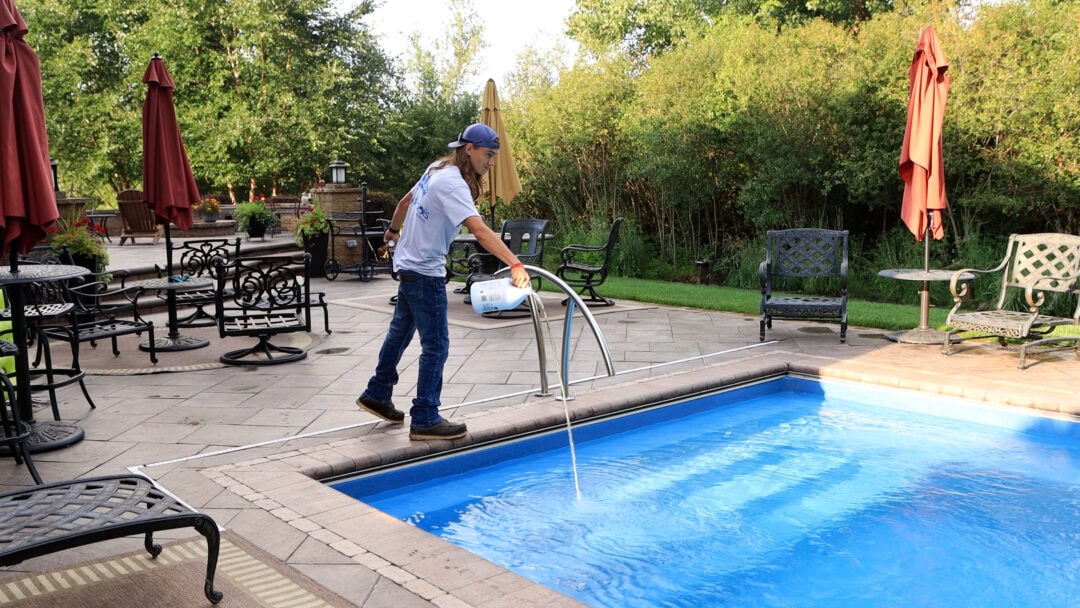
Because weather conditions in Northwest Indiana are so unique, local expertise is essential for effective pool maintenance.
An experienced swimming pool contractor understands how regional weather patterns affect:
- Water chemistry
- Equipment lifespan
- Seasonal maintenance timing
- Debris management
- Winterization procedures
Working with a local pool service provider ensures your pool is maintained according to Midwest conditions rather than generic national guidelines. Thinking about a pool maintenance plan for the upcoming season? Get a quote here.
Final Thoughts
It must be nice to keep your pool open all year-round. We here in the Midwest are unfortunately not so lucky. From spring algae growth to winter freeze protection, each season introduces challenges that affect water chemistry, equipment, and overall pool health.
Consistent pool maintenance, regular water testing, and professional pool service help protect your investment and ensure your pool stays swim-ready, not just day-to-day, but year after year.
If you’re still curious about inground pool maintenance, check out the articles below. Dive into our learning hub at the top of our page for educational materials on all things pools, concrete, landscaping, and backyard design. Thank you for reading, and have a great day!
7 Common Inground Pool Maintenance Mistakes to Avoid
DIY Pool Maintenance vs. Professional Pool Service: Which Is Worth It?
Written by Logan Edgemon