
7 Common Inground Pool Maintenance Mistakes to Avoid

A veteran pool boy once told me that with great pools comes great responsibility. This is especially true for inground pools. Proper inground pool maintenance is the key to keeping your water clear, your equipment running efficiently, and your primary investment (your pool!) protected. If you don’t know how to maintain your inground pool, however, small mistakes can lead to big problems over time.
Here at Royal Pools G2 Landscaping, we build and service fiberglass and vinyl liner inground pools throughout Northwest Indiana and South Chicagoland all summer long. We recognize that pool maintenance in seasonal regions, like here in the Midwest, can be difficult for some pool owners.
Seasonal temperature swings, heavy rain, falling debris, and freeze-thaw cycles all affect water chemistry and equipment performance. Regardless of the type of inground pool you have (fiberglass pool, vinyl liner pool, or concrete pool), they all require specialized maintenance to ensure they are clean, clear, and safely swimmable.
Here are the seven most common pool maintenance mistakes we see, along with important tips on how to avoid them.
1. Not Testing Water Regularly

One of the biggest mistakes pool owners make is only testing water when it looks cloudy or something seems wrong.
Water chemistry should be checked at least once per week during the swimming season. Without regular testing, problems can develop quickly, including:
- Algae growth
- Cloudy or dull water
- Eye and skin irritation
- Equipment corrosion
- Liner fading or wrinkling
If you’re unsure about your water balance, a local pool service or retail store that offers water testing can help you stay on track.
As a refresher, balanced pool water chemistry looks like:
- Chlorine/Bromine: 1 – 3 PPM
- pH: 7.2 – 7.8 (7.2 – 7.4 for fiberglass pools)
- Alkalinity: 80 – 120 PPM
- Calcium Hardness: 175 – 350 PPM (under 120 in fiberglass pools)
- Cyanuric Acid: 0 – 50 PPM
2. Adding Too Many Chemicals at Once
When water chemistry falls out of balance, many homeowners will attempt to fix the issue by adding multiple chemicals simultaneously. I hate to break it to anyone who has done this, but this often makes the problem worse.
Balancing your pool chemistry requires a specific sequence and method to ensure each chemical does its job and reaches the proper level.
Overcorrecting can cause:
- Chemical reactions that cloud the water
- High chlorine levels that bleach the liners
- Scaling on fiberglass or equipment
- Unstable water chemistry that takes days to correct
The best approach is to test first, make one adjustment at a time, starting with your balancers (alkalinity, pH, and calcium), and allow the water to circulate before retesting. Chlorine will not effectively sanitize your water if the balancers are out of range.
Consistency and patience are more effective than quick fixes.
3. Skipping Routine Cleaning
Debris may seem harmless, but leaves, dirt, and organic material quickly affect water quality.
When debris sits in your pool:
- It increases chlorine demand
- Stains liners and surfaces
- Clogs skimmers and filters
- Promotes algae growth
During the Midwest spring and fall seasons, trees and wind can introduce large amounts of debris into your pool.
A proper weekly routine should include:
- Skimming the surface
- Emptying baskets
- Brushing walls and steps
- Vacuuming the floor
Regular cleaning reduces chemical use and helps your system operate efficiently.
4. Neglecting the Pool Filter
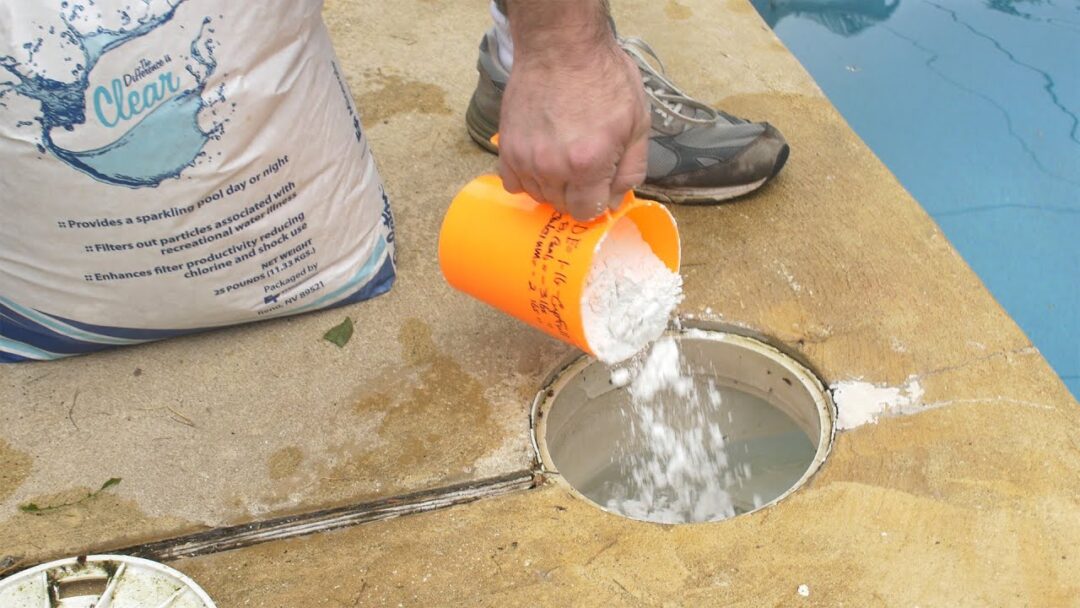
Your pool filter is responsible for removing contaminants and keeping the water clear. But many homeowners forget that filters require regular maintenance.
Common filter mistakes include:
- Not backwashing sand or DE filters
- Not recharging DE after every backwash
- Not changing DE after every deep clean
- Waiting too long to clean cartridge filters
- Ignoring high-pressure readings
- Running the system with a dirty filter
A clogged or dirty filter restricts water flow, reduces circulation, and makes chemical balancing and vacuuming more difficult.
Over time, this added strain can also shorten the life of your pump and other equipment. A good rule of thumb for
5. Not Checking the Water Level
Water level plays a bigger role in pool performance than most homeowners realize. We recommend keeping your pool water level at roughly halfway up your skimmer faceplate. If your faceplate has four screws on the width sides, maintain the water level between the two middle screws.
If the water drops below the middle of the skimmer opening:
- The pump can pull in air
- Circulation becomes inefficient
- The pump may overheat or become damaged
On the other hand, if the water level is too high, debris won’t skim properly from the surface.
Evaporation, splash-out, and leaks can all affect water levels — especially during hot summer weather in Northwest Indiana. Too low a water level can breed problems for your cover come winter. Covers require properly maintained water levels to protect your pool and to prevent them from dropping too low.
Keeping the water at the midpoint of the skimmer opening helps protect your equipment and maintain proper circulation.
6. Improper Seasonal Opening and Closing
Midwest weather makes seasonal service one of the most critical parts of pool maintenance.
Opening the pool too late in the spring or summer allows algae to develop as temperatures rise. Closing the pool too late in the fall exposes equipment and plumbing to early freeze conditions.
Improper winterization can lead to:
- Cracked plumbing lines
- Damaged pumps or filters
- Freeze damage to equipment
- Expensive spring repairs
Professional opening and closing services ensure your pool is properly prepared for seasonal changes and help extend the life of your equipment.
7. Ignoring Small Problems Until They Become Big Ones
Many costly pool repairs start as small issues that go unnoticed or ignored.
Common early warning signs include:
- Air bubbles in the return lines
- Unusual pump noise
- Small drops in water level
- Cloudy water that doesn’t improve
- Higher-than-normal filter pressure
These symptoms may indicate:
- A suction leak
- Failing pump components
- Plumbing issues
- Filter problems
- Early liner damage
Addressing problems early with a qualified swimming pool contractor or repair technician can prevent major repairs and extend the life of your system.
Why These Mistakes Matter More in the Midwest
Pools in Northwest Indiana and South Chicagoland face conditions that many warmer climates do not:
- Heavy rain that dilutes chemicals
- Wind and tree debris
- Large temperature swings
- Long winter shutdown periods
- Freeze-thaw ground movement
These factors make consistent maintenance even more important for long-term performance.
Conclusion
The fact of the matter is that most pool problems aren’t the result of one failure or mistake, but rather an accumulation of multiple small maintenance mistakes made over time. But you can avoid making these mistakes.
The solution is simple: ask your pool installer or hire a local pool service company for a maintenance tutorial that teaches you how to take proper care of your swimming pool.
Staying on top of pool maintenance keeps your pool running efficiently and avoids expensive repairs during or outside of the swim season.
Not everyone has the time to maintain their pool themselves. This is why it is recommended to work with a professional pool service provider that can help protect your investment and maximize your swim-time.
For more swimming pool maintenance information, check out the articles below. Feel free to dive into our learning hub at the top of the page. Thanks for reading. Have a great day!
DIY Pool Maintenance vs. Professional Pool Service: Which Is Worth It?
Saltwater Pool Maintenance: What Most Owners Don’t Expect
How Much Does Inground Pool Maintenance Cost in 2026?
Written by Logan Edgemon