
Pros and Cons of Concrete Pool Decks
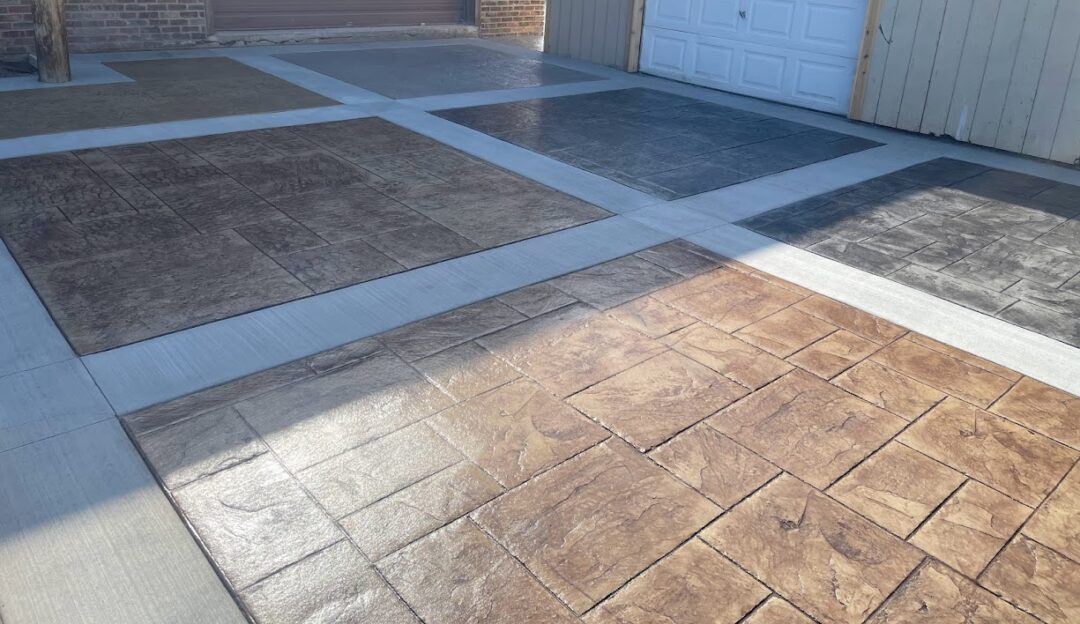
When it comes to inground pool decks, nothing beats concrete. Whether you’re going with standard broom-finished concrete or stamped concrete, a concrete pool deck offers everything you need to support your pool. Plus, it just looks really nice around a pool! Of course, that’s not to say that there are no problems that can be found with a concrete pool deck that you should be aware of.
Luckily, there are just a few significant cons that people find with concrete pool decks, but there are several pros as well.
Royal Pools G2 Landscaping pours dozens of concrete pool decks every year. Outside of pools, concrete is our thing. Standard broom-finished concrete and stamped concrete are the two most popular types of concrete pool decks, and you will find they share a lot of the same pros and cons.
In this article, we’ll discuss the major pros and cons that come with a concrete pool deck. Let’s dive in.
Standard Concrete
Pros –
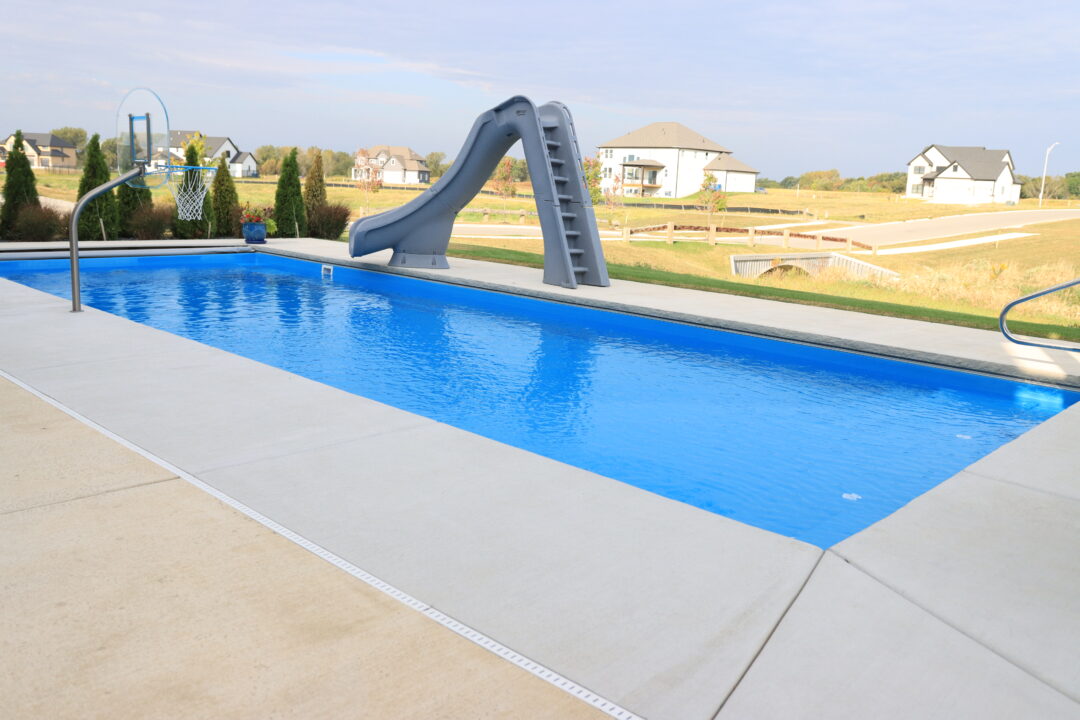
- Longevity – A pool is an investment, and by extension, so is a concrete pool deck. It is both a financial investment and a long-term investment in your happiness with the product. Investing in a concrete pool deck is one of the best decisions you can make, as it can last upwards of 50 years! After the concrete is poured into the deck shape, it spends about a month afterward hardening and settling into the shape it will occupy for the next several years. The longevity of concrete is the reason why it is the most popular material used for pool decks. If you go with a concrete pool deck, you’re ensuring that your pool deck is virtually irreplaceable for years to come.
- Customizability – The creative freedom that concrete allows is unparalleled. Concrete can be formed into any shape with almost any look. The shape of your concrete pool deck can be whatever you want it to be, so long as you hire a concrete company capable of bringing your unique vision to life. Concrete is formed and shaped during installation, allowing concrete workers to give it a unique look specific to your needs.
- Durability – The durable nature of concrete is one of the primary reasons it lasts such a long time.
Cons –
- Cracking – Talk to any concrete worker about problems with concrete, and you will hear something along the lines of, “Concrete is going to crack. It is what it is. Besides putting in control joints, there’s not much we can do about it.” This is the unfortunate truth. If you experience what is known as a relief crack, meaning a crack that forms due to improper pouring and installation, it is usually not as noticeable as a crack that forms over time due to seasonal temperature changes, lack of control joints that prevent cracking, or soil expansion. The best course of action when you notice a crack in your concrete pool deck is to seal it to prevent water or debris from entering the crack, which can cause the crack to expand. Cracks in a concrete pool deck are practically unavoidable, making it far and away the biggest con of concrete pool decks.
- Discoloration – Discoloration in your concrete pool deck is something that you may notice immediately or years after the installation. If your concrete was poured using more than one load of various mixes, your concrete may not have a uniform color. Some concrete mixes contain more water than others and can appear a different color than a thicker mix. Discoloration can also happen over time due to exposure to sunlight or direct contact with pool chemicals. There is the possibility that if your concrete appears to be different colors immediately, it can fade into a uniform color over time.
Stamped Concrete
Pros –
- Longevity
- Customizability
- Durability
Cons –
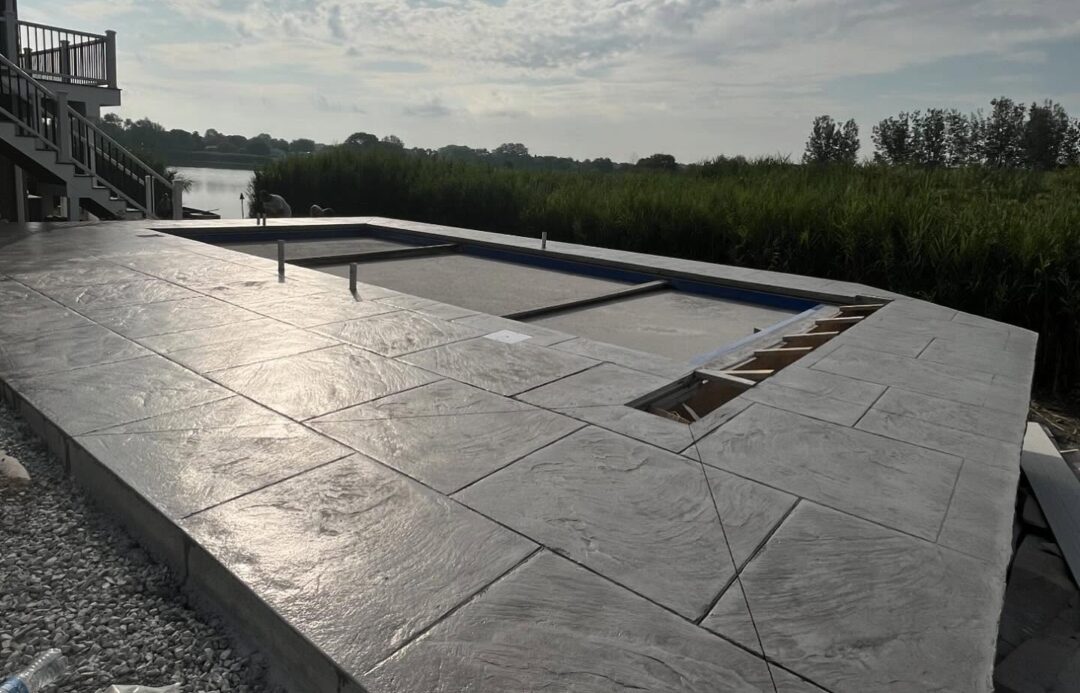
- Upkeep – Maintaining a stamped concrete pool deck is simple and only has to be done every two years, but it is nonetheless a costly and important aspect of pool maintenance. To prevent color fading and to counterbalance general wear and tear, stamped concrete pool decks require a thorough power washing, followed by sealing the entire surface of the floor. This is done upon installation and must be done at least every two years. It is recommended to do it earlier if your deck is the subject of a lot of foot traffic. Some homeowners don’t mind cleaning and resealing their stamped concrete pool deck, but many hire a concrete or pool service company to do it for them. For someone looking for a concrete pool deck that requires minimal upkeep, a stamped concrete pool deck, though beautiful, may not be ideal.
- Cracking
- Discoloration
Conclusion
It is of utmost importance to be informed on both the good and the bad when it comes to something like a pool and all the add-ons that come with it, particularly your choice of deck. There’s no debate that concrete is the most popular type of inground pool decking, but nothing is perfect. It’s vital to remember that concrete pool decks will last longer than just about anything else, but that doesn’t mean they will never crack. If there is one thing we hope you take away from this article, it’s the knowledge that concrete cracks are natural and unavoidable. All things require balance… a healthy amount of good and bad. But hopefully, you now see that the pros of concrete pool decks outweigh the cons.
Brick Pavers vs Concrete: Which is Best for Your Backyard?
Concrete Cracking and Failure Explained
Written by Logan Edgemon